As the political winds shift yet again with Donald Trump’s impending return to the White House, the future of Iran’s nuclear negotiations hangs in the balance. Just a decade after a landmark accord promised to curb Iran’s nuclear ambitions, tensions have escalated to unprecedented heights. This post will delve into the motivations of both Iran and European powers in these crucial discussions, underscoring the intricate web of international politics at play.
The Historical Context of Iran’s Nuclear Agreement
Overview of the 2015 Joint Comprehensive Plan of Action (JCPOA)
The Joint Comprehensive Plan of Action, commonly known as the JCPOA, was established in 2015. This landmark agreement involved Iran and six world powers: the United States, the United Kingdom, France, Russia, China, and Germany. The essence of the deal was to limit Iran’s nuclear capabilities in exchange for the lifting of economic sanctions.
Under the JCPOA, Iran agreed to reduce its uranium enrichment levels to 3.67%. This was a significant reduction from the previous levels, which were much higher. The aim was to ensure that Iran could not develop nuclear weapons. In return, the international community would lift sanctions that had severely impacted Iran’s economy.
Consequences of Trump’s Withdrawal in 2018
However, the landscape shifted dramatically in 2018. Then-President Donald Trump announced the United States’ withdrawal from the JCPOA. His administration argued that Iran posed a significant threat in the Middle East and that the agreement was flawed.
Trump’s decision to reimpose sanctions was a turning point. It squeezed Iran’s economy, leading to inflation and widespread discontent among the Iranian populace. The sanctions targeted key sectors, including oil exports, which are vital for Iran’s economy. The withdrawal also raised tensions between Iran and the Western powers that remained in the agreement.
“Iran made the nuclear agreement and implemented it with goodwill. It was the other parties who withdrew.”
Iran’s Escalated Uranium Enrichment
In the wake of the U.S. withdrawal, Iran began to escalate its uranium enrichment. As of now, Iran has reached a level of 60% enrichment. This is a significant leap from the 3.67% allowed under the JCPOA. The goal of this escalation is to gain leverage in any potential future negotiations.
But what does this mean for global security? Enriching uranium to 60% is a step closer to weapons-grade material, which requires 90% enrichment. The international community is watching closely, as these developments heighten the risk of nuclear proliferation in the region.
Implications of Renewed Sanctions
The renewed sanctions have had profound implications on Iran’s economy. They have led to a decrease in oil exports, which are crucial for revenue. As a result, the Iranian government has faced mounting pressure from its citizens. Economic hardship often translates to political instability. As the situation evolves, the Iranian leadership may find itself in a precarious position.
Timeline of Key Events
To better understand the historical context, here’s a timeline highlighting significant events related to the Iran nuclear deal:
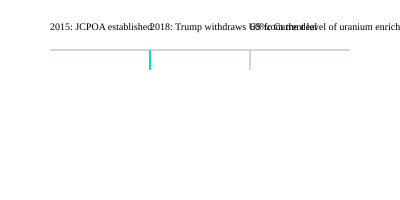

This section captures the essence of the historical context surrounding Iran’s nuclear agreement. It highlights the pivotal changes that have occurred since the JCPOA’s inception. The implications of these changes continue to resonate in the realm of international relations and nuclear policy.
Political Motives Behind the New Round of Talks
The political landscape surrounding Iran has become increasingly complex. European powers are now reengaging with Iran for several reasons. As the world watches, the dynamics are shifting. What motivates Europe to reach out to Iran at this critical juncture?
Reasons for European Powers’ Renewed Engagement
First, there is the looming presence of the Trump presidency. The uncertainty regarding his administration’s policies creates a sense of urgency. European nations, particularly France, the UK, and Germany, are keen to maintain their influence in negotiations. They want to ensure that they stay in the game of diplomacy and policy making on Iran.
-
Geopolitical Interests: European powers are concerned about the stability of the region.
-
Economic Considerations: The potential for trade and investment in Iran is appealing.
-
Security Concerns: A stable Iran could mean a more secure Middle East.
Impact of Trump’s Presidency on Iran-West Relations
Trump’s presidency has had a profound impact on Iran-West relations. His administration’s approach to foreign policy has been unpredictable, causing ripples across the globe. The upcoming snapback mechanism embedded in the Joint Comprehensive Plan of Action (JCPOA) is set to take effect in October. This mechanism allows for the reimposition of sanctions if Iran does not comply with the terms of the agreement.
As Victoria Gatenby from Al Jazeera noted, “What is coming in is the president Trump back to power in Washington.” This statement highlights the urgency felt by European powers. They must act quickly to engage Iran before potential sanctions are reintroduced.
Iran’s Balancing Act Amidst Regional Pressures
Iran is also navigating a delicate balancing act. With regional tensions on the rise, it is essential for Iran to strengthen its diplomatic ties. Recent reports indicate that 67% of analysts believe there is increased tension from regional actors. This statistic underscores the importance of diplomatic engagement.
Iran’s leaders are aware of the shifting dynamics. They are making diplomatic overtures to showcase their willingness to cooperate. This strategy is crucial for maintaining stability and fostering economic growth.
|
Event |
Details |
|---|---|
|
October |
Expected European snapback on sanctions |
|
Recent Reports |
67% indicate increased tension from regional actors |
In conclusion, the renewed engagement between European powers and Iran reflects a complex interplay of geopolitical interests, economic considerations, and security concerns. As the situation evolves, all eyes will be on how these dynamics unfold in the coming months.

Potential Outcomes of the Negotiations
The negotiations between the United States and Iran are complex and layered. Both parties have distinct hopes and expectations. Understanding these can shed light on the potential outcomes of renewed talks.
What Both Parties Hope to Gain
-
For the United States: The primary goal is to limit Iran’s nuclear capabilities. The US wants to ensure that Iran does not enrich uranium to weapons-grade levels. This means keeping enrichment below 90%, which is the threshold for creating nuclear weapons.
-
For Iran: Iran seeks relief from economic sanctions. The previous agreements provided some economic benefits. They want assurances that future agreements will lead to improved economic conditions.
But can trust truly be established? As one expert noted,
“Trust is not something that you just get on the spot. Trust is something that is built up actually through agreements over the course of a very long time.”
This sentiment highlights the challenges both sides face in building a foundation for future cooperation.
Expected Challenges Related to Iran’s Regional Influence
Iran’s influence in the Middle East is a significant concern for the US and its allies. The country has been active in supporting various groups across the region. This raises questions about how negotiations might impact Iran’s regional activities. Will the US be able to rein in Iran’s influence while negotiating?
There are fears that if these talks fail, Iran may double down on its regional ambitions. The potential for Iran to exit the Non-Proliferation Treaty (NPT) looms large. If that happens, it could lead to a cascade of negative consequences, as noted in discussions among experts. They argue that the Biden administration’s reluctance to re-enter previous agreements has only worsened the situation.
The Role of Israel in US-Iran Negotiations
Israel plays a pivotal role in these discussions. The Israeli government is deeply concerned about Iran’s nuclear ambitions. They view Iran as a direct threat to their national security. This concern complicates the negotiations.
Israel’s influence can be seen in the US’s approach to Iran. There are suggestions that former President Trump’s policies may have been influenced by his relationships with Israeli leaders. This raises questions about conflicts of interest that could affect the US’s negotiating stance.
Predictions and External Pressures
Looking ahead, several scenarios are possible. If negotiations succeed, there could be a temporary easing of tensions. However, if talks collapse, Iran may ramp up its nuclear program. This could trigger a regional arms race, with other countries seeking their own nuclear capabilities.
External pressures also play a role. European nations may exercise their own influence in the negotiations. They could push for a snapback of sanctions if Iran does not comply with agreements. This creates a precarious situation, where one misstep could lead to significant fallout.
In conclusion, the potential outcomes of the negotiations between the US and Iran are fraught with uncertainty. The stakes are high, not just for the two countries, but for regional and global stability. How will these talks unfold? Only time will tell, but the implications are vast and far-reaching.
The Road Ahead: Trust and Diplomacy in a Tumultuous Landscape
In the world of international relations, trust is not just a nice-to-have; it’s a necessity. As countries engage in diplomacy, the foundation of their negotiations often rests on the trust they build with one another. Without it, deals can crumble, and relationships can sour. The current geopolitical climate, particularly with the complexities surrounding Iran and the United States, highlights this critical aspect.
The Importance of Building Trust
Trust in diplomacy is akin to a fragile glass. Once broken, it can be challenging to piece back together. Countries must engage in consistent dialogue and demonstrate reliability. In the case of Iran, the stakes are high. The nation seeks to navigate its foreign policy amidst shifting alliances and pressures. The recent history of sanctions and nuclear negotiations has left a deep imprint on its diplomatic approach.
Complexities of Negotiating with a Change in US Leadership
With a new administration in the United States, the landscape of negotiations can shift dramatically. The question looms: how will the change in leadership impact diplomatic relations? Analysts suggest that the incoming administration may prioritize certain issues over others. As one expert noted,
“It may very well end up being that Trump prioritizes this issue, perhaps not immediately, but after realizing how difficult the others are.”
This statement underscores the uncertainty that can accompany a leadership change. For Iran, this could mean an opportunity to re-engage with the U.S. on terms that could be more favorable than before. However, the complexities of past negotiations, especially regarding nuclear activities, add layers of difficulty. The snapback mechanism, a tool that could reintroduce sanctions, looms over these discussions like a sword of Damocles.
Long-Term Implications for Iran’s Foreign Policy
The long-term implications of these negotiations for Iran are profound. The country is at a crossroads. On one hand, there is an interest in rebuilding trust and finding a way back to diplomatic engagement. On the other, there is the fear of falling victim to a renewed maximum pressure campaign from the U.S. The Iranian leadership recognizes that the stakes are high, and the consequences of failure could be dire.
-
Iran may seek to peel off European partners to strengthen its position.
-
There is a strong desire to avoid escalation and find a reconciliation that resembles past agreements.
-
Analysts suggest that 70% believe a new framework deal could help deescalate tensions.
This delicate balancing act requires careful navigation. The Iranian government is aware that the European nations involved in the nuclear negotiations are also looking for ways to maintain their influence and avoid being sidelined. This mutual interest could serve as a basis for renewed discussions.
Conclusion
In conclusion, the path ahead for Iran and its diplomatic relations is fraught with challenges and opportunities. Trust remains the cornerstone of successful negotiations. As the new U.S. administration settles in, both sides must grapple with their past and the potential for future collaboration. The implications of these discussions will not only shape Iran’s foreign policy but also impact the broader international community. The road ahead is uncertain, but with a commitment to rebuilding trust, there may be a way forward that benefits all parties involved.
TL;DR: Amidst the political uncertainty of an incoming Trump administration, this blog examines the motivations and strategies of Iran and European powers in the evolving landscape of nuclear negotiations.