
I didn’t expect a routine Monday to unfold like a tech thriller, yet there I was, watching the normally humming digital world grind to a halt as AWS spiraled into chaos. It started innocuously—my banking app threw errors; my kid’s Fortnite session froze mid-victory dance. By the time I’d checked Reddit (or tried to), the outlines of a much bigger story emerged: this wasn’t just another server hiccup; we were living through a global cloud disruption in real time.
The AWS Outage Timeline: Anatomy of a Digital Meltdown
At exactly 16:29 BST on October 20, 2025, the digital world experienced a shockwave. Amazon Web Services (AWS) suffered a major outage, with the epicenter traced to its US-EAST-1 region—the company’s oldest and largest data center in Northern Virginia. This was not just a minor hiccup. Within minutes, the outage rippled across the globe, disrupting the operations of over 1,000 companies and impacting millions of users who rely on AWS-powered services every day.
The outage timeline unfolded rapidly. First, users began reporting issues accessing major platforms. Snapchat, Reddit, Canva, and HMRC were among the first to go dark. Soon after, banks like Lloyds and Halifax and gaming giants Roblox and Fortnite became unreachable. Even financial services such as Coinbase and Robinhood saw disruptions, highlighting the scale of the global cloud disruption caused by the AWS outage in October 2025.
The root cause was quickly identified: a DNS resolution failure in the US-EAST-1 region. For those unfamiliar, DNS (Domain Name System) acts as the internet’s address book, connecting users to the correct online destinations. When AWS’s DNS system failed, it broke these connections, leaving technically operational platforms isolated from their users. As a result, even though the underlying services like DynamoDB and EC2 were running, they couldn’t be reached—triggering cascading failures worldwide.
- 16:29 BST: Outage starts in US-EAST-1 (Northern Virginia).
- 16:35 BST: Major companies report service disruptions; social media and banking apps go offline.
- 16:45 BST: Gaming and creative platforms like Roblox, Fortnite, and Canva become inaccessible.
- 17:00 BST: Financial services and smart devices experience outages; millions of users affected globally.
The sheer scale of the incident drew reactions from across the tech sector. As Matthew Prince, CEO of Cloudflare, put it:
“We’re grateful we weren’t at the center of this.”
With AWS supporting nearly a third of all online services, the impact on companies and end users was immediate and severe. The AWS outage timeline from October 2025 is a stark reminder of how deeply interconnected—and vulnerable—our digital infrastructure has become.
When DNS Fails: A Deep Dive into the Cause (and Why It’s Always DNS)
There’s an old joke in tech circles: “It’s always DNS!” Today, that punchline became reality yet again. On 20 October 2025, a critical DNS resolution failure within AWS’s Northern Virginia data center (US-EAST-1) sent shockwaves across the internet. As I watched major platforms like Snapchat, Reddit, and even government services like HMRC grind to a halt, the scale of the disruption was staggering. The root cause? A DNS error—the kind of issue that can make even the most robust cloud infrastructure feel fragile.
For those less familiar, the Domain Name System (DNS) is the internet’s address book. It translates user-friendly names like snapchat.com into the numerical addresses computers use to find each other. When DNS fails, it’s as if the map to your destination disappears. Today, AWS’s DNS misfire meant that while many services were technically still running, users simply couldn’t reach them. It’s a uniquely frustrating scenario: everything is online, but no one can get in.
So, what actually happened? According to AWS, the outage was traced to a DNS resolution failure in their largest and oldest data center. This wasn’t a cyberattack—AWS confirmed there was no evidence of external threats. Instead, the problem likely stemmed from routine maintenance, a server crash, or a misconfiguration. These are the usual suspects when it comes to DNS failures, and they can have outsized consequences. As the boss of Cloudflare wryly noted, he was just relieved it wasn’t his company this time.
When a DNS failure AWS event like this hits, the effects ripple far beyond the initial point of failure. Because AWS is the backbone for a third of the world’s online services, a single DNS error can strand millions of users and businesses. Even core services like AWS DynamoDB were impacted, highlighting how a simple mapping error can cascade into a full-blown cloud infrastructure failure.
“It’s always DNS!” – repeated inside tech circles whenever these incidents strike.
Today’s outage is a stark reminder: when so much of the internet relies on one provider, even a minor DNS misstep can bring the digital world to a standstill. For both techies and everyday users, the frustration is real—and the lesson is clear.
Downstream Chaos: How One Glitch Crashed Banks, Apps, and Beyond
At 16:29 BST on October 20, 2025, a single DNS glitch inside Amazon Web Services (AWS) sent shockwaves through the digital world. As I watched the chaos unfold, it became clear that the impact on companies and consumers was both immediate and far-reaching. The outage didn’t just freeze our favorite social media feeds—it locked users out of critical banking platforms, government services, and everyday apps, exposing just how much of our lives depend on a single cloud provider.
Financial Services Disruption: Locked Out of Banks
For thousands, the most alarming consequence was the sudden financial services disruption. Major banks like Lloyds and Halifax found themselves unable to connect users to online banking. Customers reported being locked out of their accounts, unable to check balances, transfer funds, or even receive salary payments. For businesses relying on real-time transactions, the outage meant stalled operations and mounting financial losses. The ripple effect was immediate: payment processors and fintech apps relying on AWS also went dark, compounding the confusion.
Government Services Outage: Tax and Admin at a Standstill
The outage hit government services just as hard. The UK’s HMRC portal, vital for tax filings and business administration, became inaccessible. For many, this meant missed deadlines, delayed refunds, and a halt to essential public services. It was a stark reminder that cloud outages aren’t just about lost entertainment—they can pause the machinery of government itself.
Major Companies Affected: Apps and Games Frozen
Consumer frustration peaked as major companies like Snapchat, Reddit, and Canva went offline. Popular games such as Roblox and Fortnite were suddenly unplayable, leaving millions of users in the dark. For creators and businesses, Canva’s downtime meant missed deadlines and lost productivity. Even smart home devices and cloud-backed services—often overlooked in outage reports—stopped responding, highlighting the hidden reach of AWS in our daily routines.
Ripple Effect: Beyond the Obvious
- Services not directly broken were still unreachable due to DNS failures.
- Operational and financial losses mounted across sectors.
- User frustration soared as explanations lagged behind the disruption.
Recovery from the outage is ongoing, illustrating both the power and fragility of hinging so much on one provider.
Today’s AWS outage was a vivid lesson in how a single technical error can cascade from consumer apps down to the very core of financial and government infrastructure, disrupting the lives of millions in an instant.
So, What Now? Searching for Safety Nets in the Cloud Monopoly Game
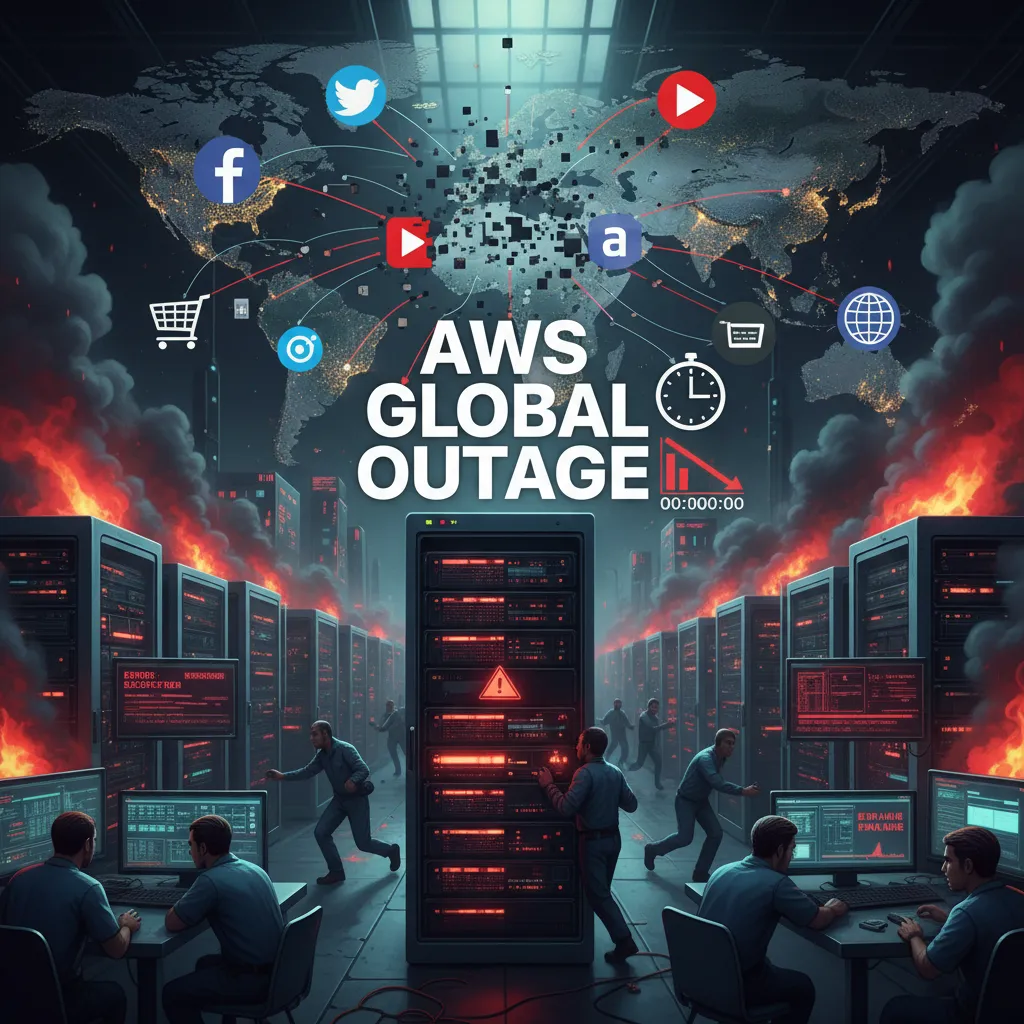
As I watched the October 2025 AWS outage unfold, it became clear that we’re all playing a high-stakes game with only a few major players holding the cards. AWS’s market dominance—supporting roughly a third of all internet services—means that when it stumbles, the shockwaves hit everything from social media to banking, gaming, and even government services. Today’s DNS failure was a stark reminder: the risks of cloud concentration are real, and the domino effect can be devastating.
Cloud Service Provider Alternatives: Who’s Really Competing?
After today, many are asking about alternatives to AWS. Microsoft Azure and Google Cloud Platform are the only true rivals at scale, but AWS still towers above them in terms of global footprint and influence. Other options—IBM, Alibaba, and Europe’s Stackit (launched by Lidl in 2024)—are gaining attention, especially as companies rethink their cloud computing risk management strategies. Still, none match AWS’s reach or reliability record, making genuine diversification a challenge.
Regional Cloud Providers in Europe: Can They Break the Monopoly?
Europe has started to explore its own cloud infrastructure, with Stackit aiming to offer a regional alternative. Yet, the road is steep. The UK’s debate over infrastructure independence highlights the dilemma. When a Member of Parliament suggested a homegrown AWS, the response was blunt:
“We already have AWS, over there.”
This sums up the challenge—AWS is so entrenched that building a true competitor seems almost out of reach. But today’s outage has reignited calls for regional cloud providers in Europe and the UK, with policymakers and businesses alike questioning whether relying on a single US-based giant is wise.
Cloud Computing Risk Management: Time for Multi-Cloud and Multi-Region?
The outage exposed the dangers of putting all our eggs in one basket—not just in one provider, but often in a single geographic region. Experts are now urging businesses to adopt multi-region and multi-cloud disaster recovery strategies. This means spreading workloads across different cloud service provider alternatives, reducing the risk that a single failure takes down critical services.
As the dust settles, the debate over AWS market dominance and the future of cloud infrastructure is only intensifying. The lesson is clear: the more concentrated our digital world becomes, the greater the risk when something goes wrong. For now, the search for real safety nets in the cloud monopoly game continues.
User Frustrations & The Human Cost: When a Monday Feels Like 1995 Again
Today’s AWS outage was more than just a technical hiccup—it was a stark reminder of how deeply our lives are woven into the fabric of cloud infrastructure. As I sat at my desk, watching my retirement savings login spin endlessly before timing out, I couldn’t help but think of the old dial-up days. But unlike the 1990s, there was no gentle nostalgia—just a wave of user frustration as AWS services failed across the globe.
Millions of people found themselves suddenly disconnected from the digital world they rely on. Banking apps like Lloyds and Halifax froze, leaving customers unable to check balances or make payments. Social platforms such as Snapchat and Reddit went dark, silencing conversations and communities. Even the world of online gaming ground to a halt, with Roblox and Fortnite players locked out mid-session. Canva users, HMRC customers, and countless others faced similar dead ends. For a few hours, it felt as if we’d been thrust back into a pre-broadband era—except this time, the panic was real, and the stakes were much higher.
The scale of user frustration AWS triggered was immediately visible. Over 1,356 public comments flooded the BBC’s outage news story within hours, with forums and social media echoing the same sentiment: confusion, anger, and a desperate search for answers. Many users expressed not just annoyance at the disruption, but genuine anxiety about what these major platform disruptions mean for their daily lives and financial security. As one commenter put it, “Today’s incident has shown that the decision is not so straightforward, as reliance on a single provider can lead to widespread vulnerabilities.”
This isn’t an isolated event. Technology outages trends in 2025 show that these disruptions are becoming more frequent and more impactful. From WhatsApp to Greggs earlier this year, the pattern is clear: as our world centralizes around a handful of tech giants, the risk—and the human cost—of outages grows. The emotional fallout is real. People are tired. There’s a sense of tech fatigue setting in, as users wonder if they can trust the systems that underpin their work, finances, and social lives.
As recovery from today’s AWS outage continues, one thing is certain: the human cost of these failures can’t be measured in downtime alone. Behind every error message is a person—frustrated, anxious, and increasingly aware of just how fragile our digital world has become.
TL;DR: Millions were left stranded as AWS suffered a massive outage on October 20, 2025, caused by a DNS failure. The domino effect rippled through social platforms, banks, games, and government services—making the case for cloud diversification and taking a hard look at our dependency on a handful of digital giants.