

Table of Contents
- 🤖 What is Artificial Intelligence?
- 📚 Machine Learning: Teaching Computers from Data
- 🧭 Types of Machine Learning
- 🧠 Deep Learning and Neural Networks
- 🧩 Popular Neural Architectures
- ✨ Generative AI, NLP and Large Language Models
- 🛠 Tools, Libraries and Practical Tips
- 🚀 How to Start Learning AI
- ❓ Frequently Asked Questions
- 🔚 Final Thoughts
🤖 What is Artificial Intelligence?
Artificial intelligence is the technology that lets computers perform tasks that normally require human intelligence. Pattern recognition, speech recognition and image analysis are classic examples.
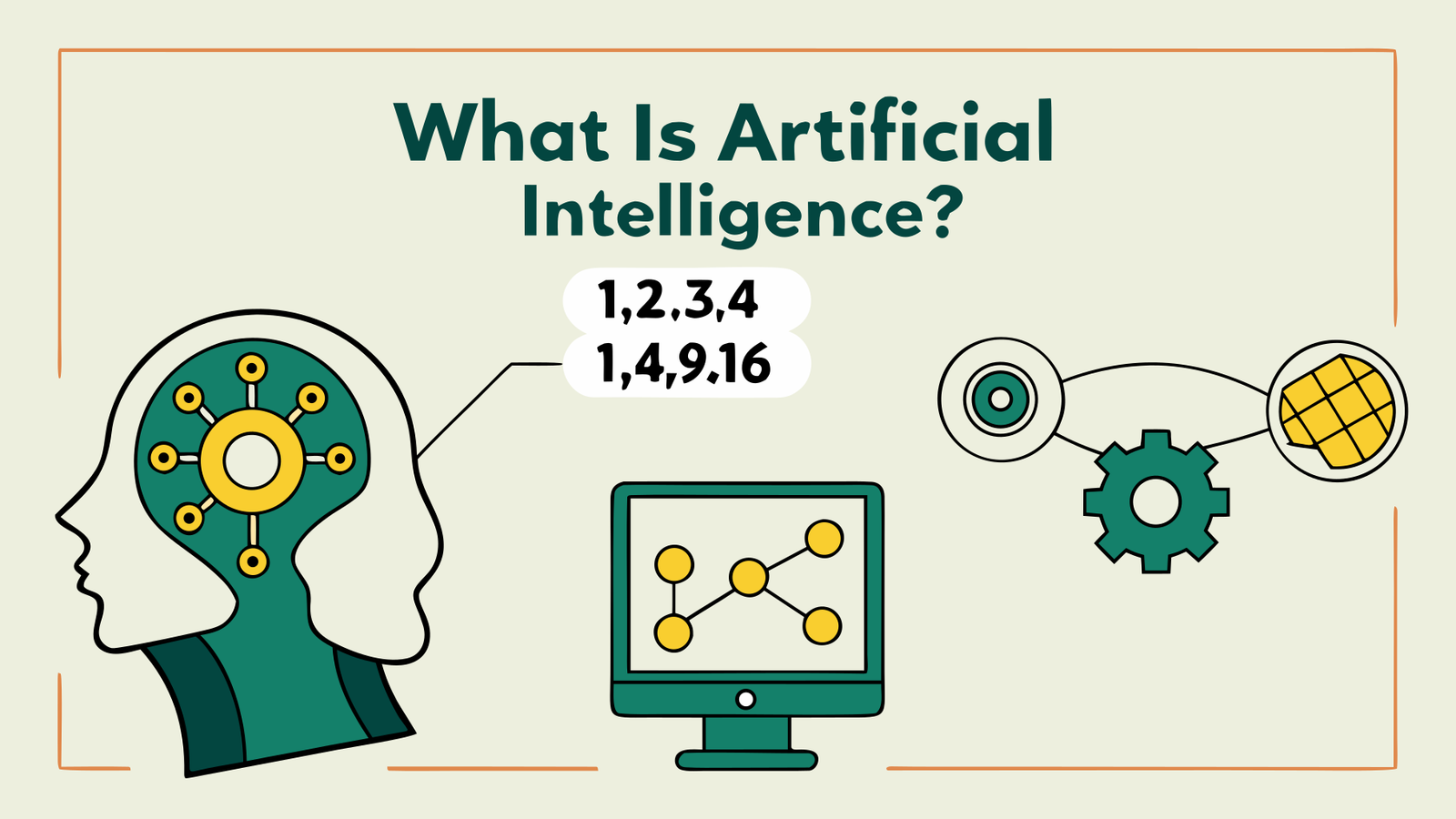
Think of a simple pattern example: inputs 1, 2, 3, 4 produce outputs 1, 4, 9, 16. A human sees the square relationship and expects 5 to map to 25. AI systems learn to discover similar patterns from data and use them to make predictions.
📚 Machine Learning: Teaching Computers from Data
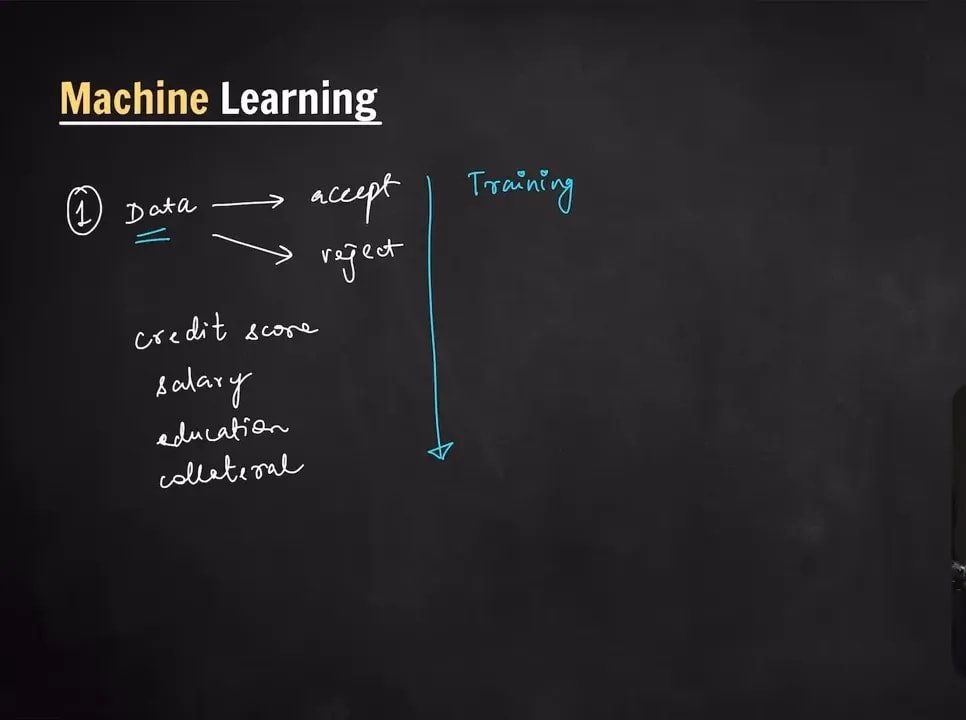
Machine learning is a subdomain of AI where algorithms learn patterns from data rather than being explicitly programmed. Most practical AI today—from recommendation engines to fraud detection—relies on machine learning.
Every ML workflow has two main phases:
- Training: Learn logic or patterns from historical labeled or unlabeled data.
- Inference: Use the learned model to make predictions on new inputs.
🧭 Types of Machine Learning
There are three primary flavours to know: supervised learning, unsupervised learning and reinforcement learning.
Supervised learning
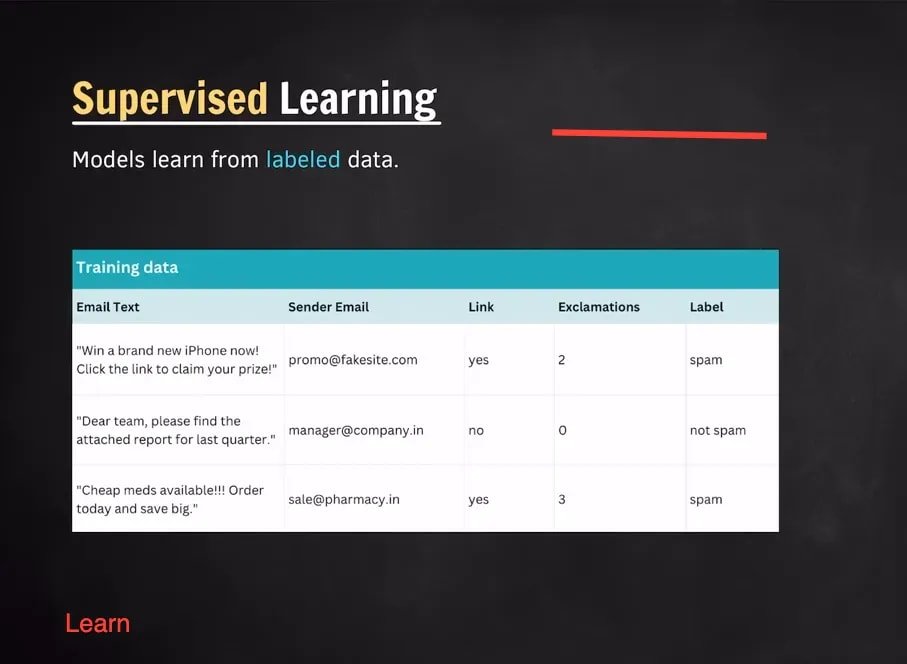
Models learn from labeled data (inputs X with known outputs Y). Typical tasks:
- Classification maps inputs to a finite set of categories (spam vs not spam, cat vs dog).
- Regression predicts continuous numeric values (delivery time, stock price).
Unsupervised learning
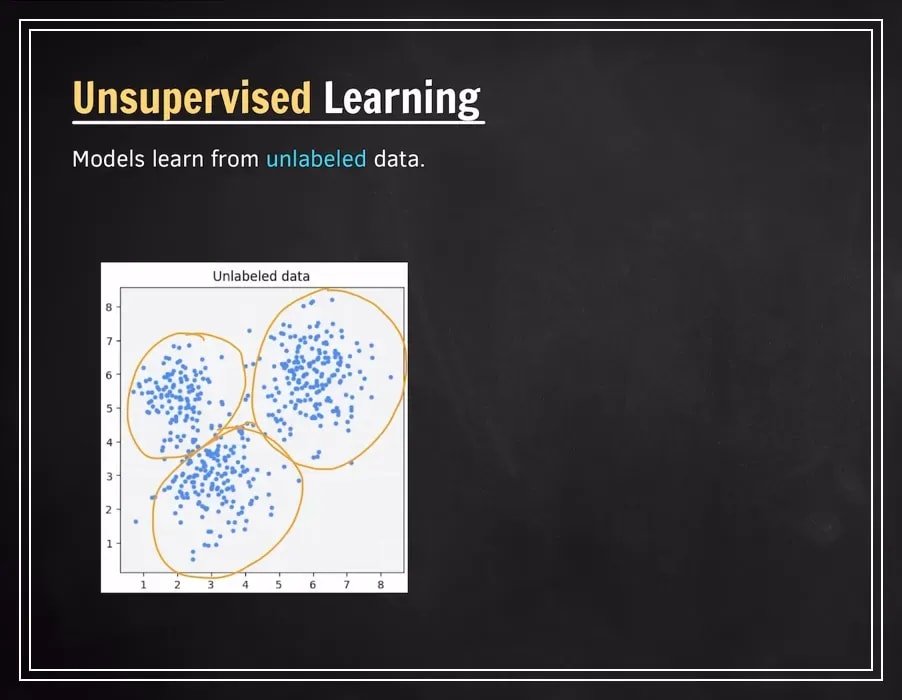
Models learn from unlabeled data and try to find structure: clusters, associations and anomalies.
- Clustering groups similar items together (news articles grouped into tech, sports, politics).
- Association finds relationships between items (market basket analysis: bread and milk often bought together).
- Anomaly detection flags outliers useful in finance and security.
Reinforcement learning
An agent interacts with an environment, takes actions and receives rewards or penalties. The goal is to maximize cumulative reward over time. Think training a dog with treats: good actions get rewarded, bad actions get penalized.
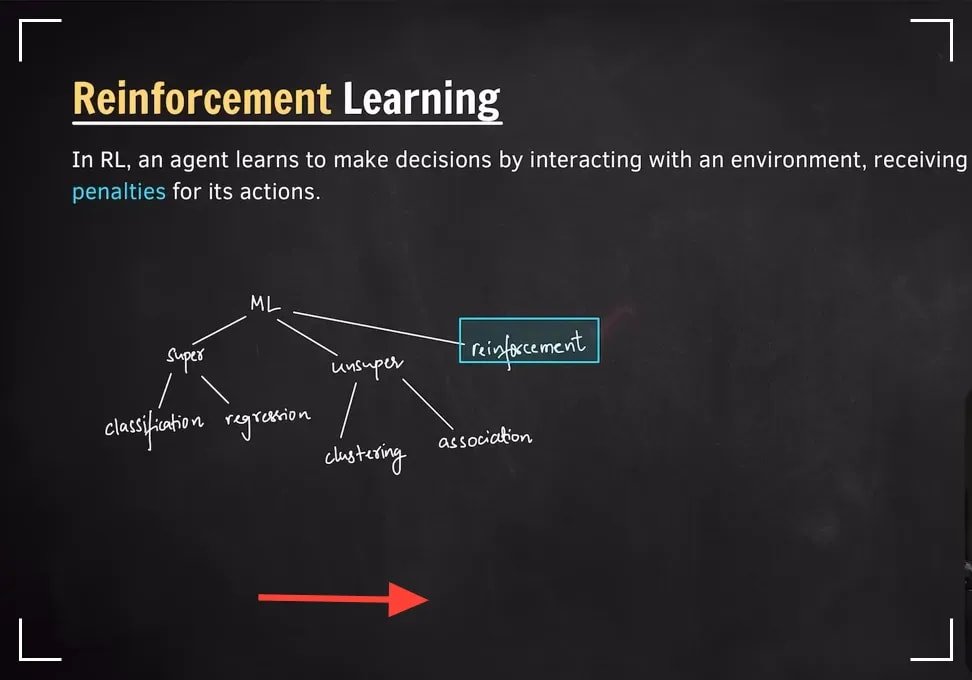
Use cases include game-playing agents, robotics and decision-making in sequential tasks such as self-driving cars.
🧠 Deep Learning and Neural Networks
Deep learning is a subset of machine learning based on neural networks. It excels at extracting features from unstructured data like images, audio and raw text where traditional statistical models need manual feature engineering.
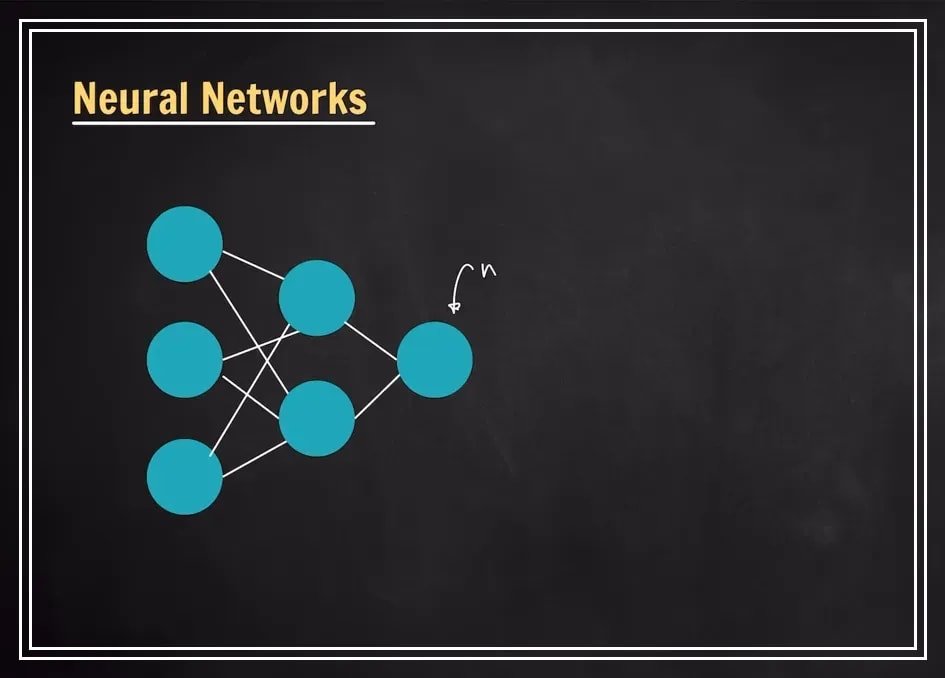
Neural networks are composed of layers of interconnected neurons. Each connection has a weight and each neuron usually has a bias. Training adjusts weights and biases so network outputs match expected results.
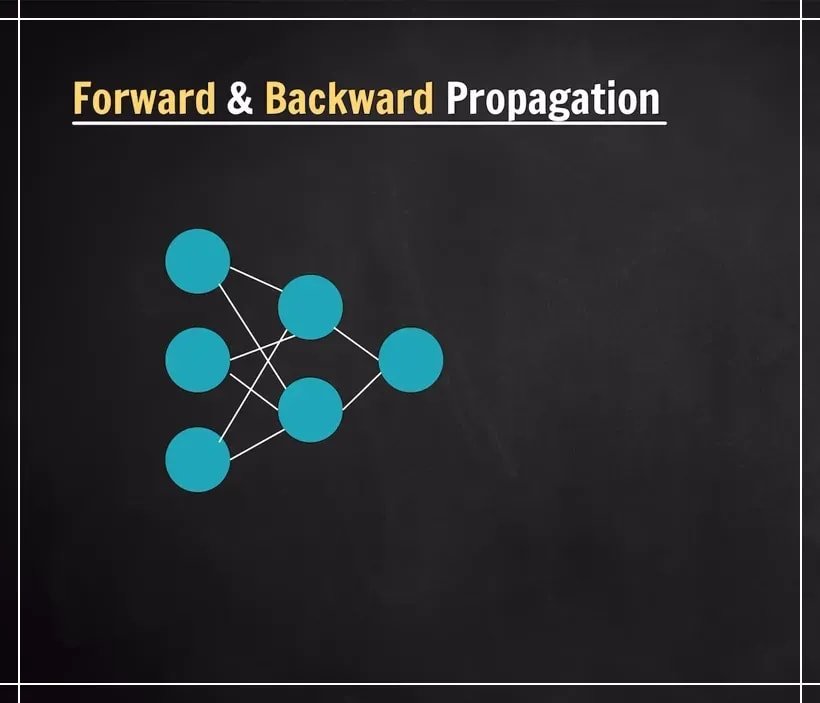
Training loop at a glance:
- Forward propagation produces a prediction from inputs.
- Loss calculation measures the difference between prediction and ground truth.
- Backward propagation updates weights to reduce loss.
🧩 Popular Neural Architectures
Different architectures suit different data types and tasks.
Feed Forward Neural Networks (FNN)
Data flows in one direction with no loops. Good for tabular data and structured prediction like loan approval or medical diagnosis.
Recurrent Neural Networks (RNN)
RNNs maintain state or memory across steps and are built for sequential data such as language or time series. For longer-term dependencies, LSTM or GRU variants are used.
Convolutional Neural Networks (CNN)
CNNs process grid-like data such as images. They use kernels to examine small patches, detect patterns like edges and corners, and drastically reduce computation compared with fully connected layers on raw pixels.
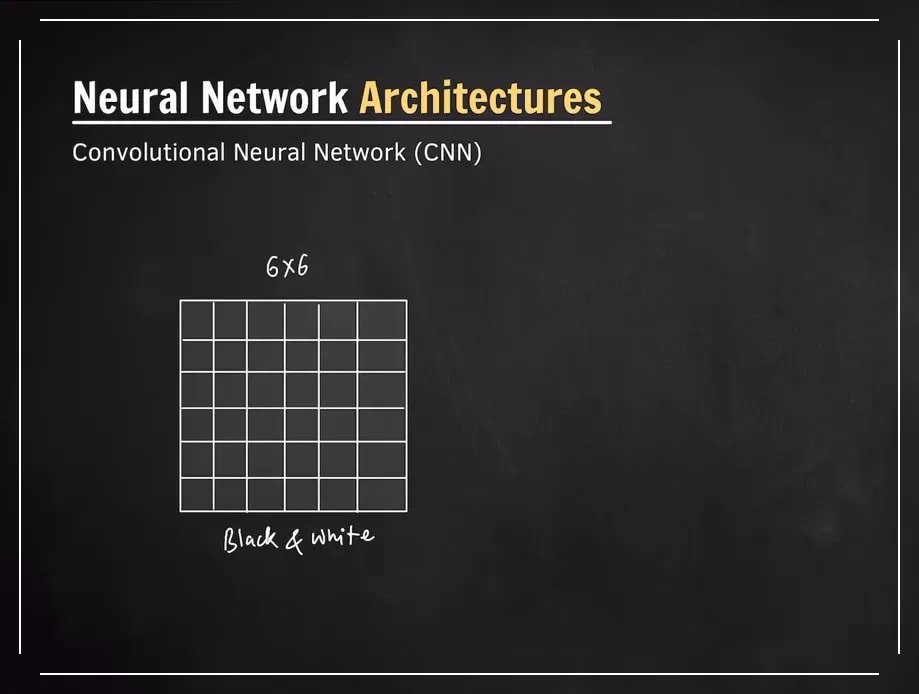
CNNs are core to computer vision tasks: object classification, detection and segmentation.
Transformers
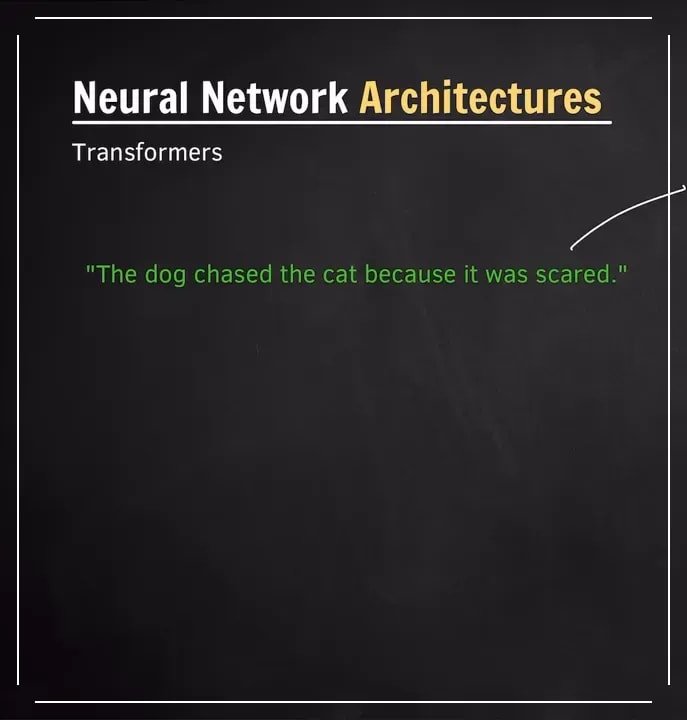
Transformers use attention mechanisms to process sequences in parallel rather than step-by-step. Attention scores tell the model which tokens in the sequence should be focused on, enabling strong understanding of context and meaning. Transformers power modern LLMs like GPT.
✨ Generative AI, NLP and Large Language Models
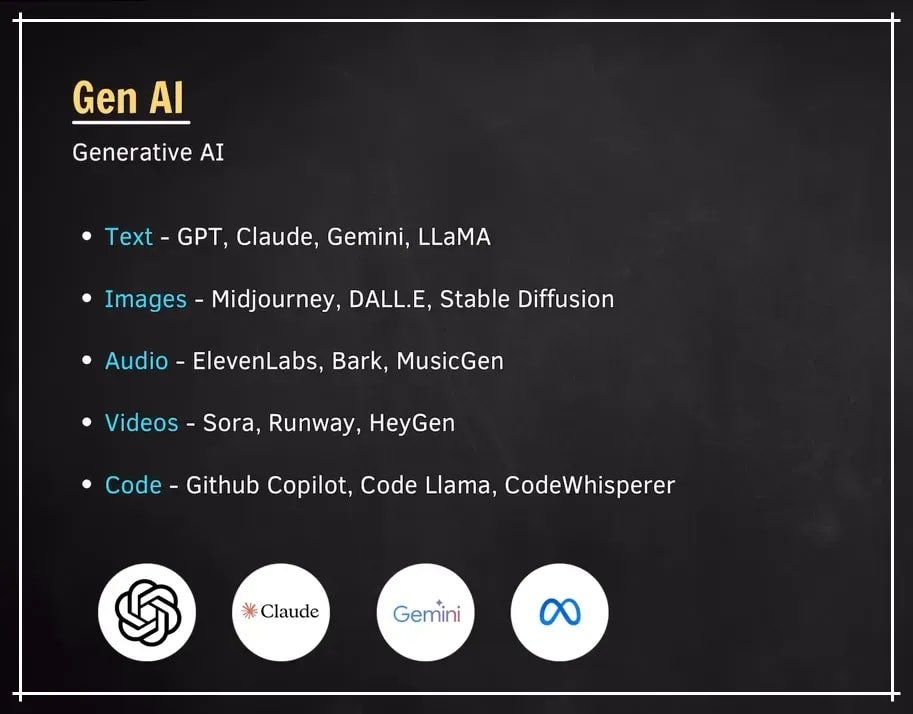
Generative AI produces new text, audio, images or video. Popular consumer tools are powered by generative models:
- Text: GPT (OpenAI), Claude (Anthropic), Gemini (Google)
- Images: Midjourney, DALL-E, Stable Diffusion
- Audio: 11Labs, Bark, MusicGen
- Video and multimedia: Sora, Runway, HeyGen
- Code assistants: GitHub Copilot, CodeLLaMA, CodeWhisperer
NLP (natural language processing) is the field focused on making machines understand and generate human language. Large language models are very large neural networks trained on massive text corpora and billions to trillions of parameters. They are a dominant approach for many NLP tasks.
Because LLMs are so large and powerful, production systems often combine model outputs with techniques like RLHF reinforcement learning with human feedback to reduce toxic or irrelevant responses and improve alignment with user expectations.
🛠 Tools, Libraries and Practical Tips
Common tools and languages:
- Python is the dominant language in industry and academia; R is also used.
- Data exploration: NumPy, Pandas.
- Visualization: Matplotlib, Seaborn.
- Classical ML: scikit-learn, XGBoost.
- Deep learning: PyTorch (recommended for beginners and academics), TensorFlow (widely used in industry).
- Datasets and community projects: Kaggle.
- Hardware: use GPUs or cloud instances when training large models or processing large datasets.
🚀 How to Start Learning AI
Begin with the fundamentals:
- Understand the differences: AI vs machine learning vs deep learning.
- Work through supervised projects (classification and regression) using scikit-learn.
- Move to neural networks with PyTorch: implement forward and backward propagation by hand to learn intuition.
- Explore CNNs for images and transformers for language.
- Use public datasets on Kaggle to build end-to-end projects and portfolios.
❓ Frequently Asked Questions
What is the difference between AI, machine learning and deep learning?
When should I use supervised learning versus unsupervised learning?
Why is deep learning better for images and audio?
What is a large language model and why are they powerful?
Which tools should a beginner learn first?
🔚 Final Thoughts
AI touches everyday tools we use: face unlock, voice assistants, recommendations, traffic prediction and code assistants. The fundamentals covered here—types of learning, neural architectures, generative AI, NLP and tools—provide a roadmap to build solid skills. Keep experimenting with projects, read documentation, and iterate: practical experience is the fastest way to learn.
Keep learning and keep exploring.
For a simple example of a minimal placeholder site layout, see Prime News, which demonstrates a basic search and recent posts template.
To view an “about” placeholder page, check out Our Story for an example of a page showing a “Sorry, No Posts Found” message.
For another minimal template example, visit Industry Challenges to see a similar empty-posts layout used as a placeholder.