Feeling exhausted after breakfast, hungry again by mid-morning, or desperate for something sweet at 3 p.m. can feel like a willpower problem. Often, it is more useful to look at the pattern of your meals, sleep and movement.
Glucose, also called blood sugar, is an essential fuel source. The goal is not to eliminate every carbohydrate or never eat dessert. It is to reduce sharp rises and falls in blood sugar by making realistic changes to what you eat, when you eat it and what you pair it with.
Key Takeaways
- Choose a savoury, protein-based breakfast to avoid starting the day with concentrated sugar and starch.
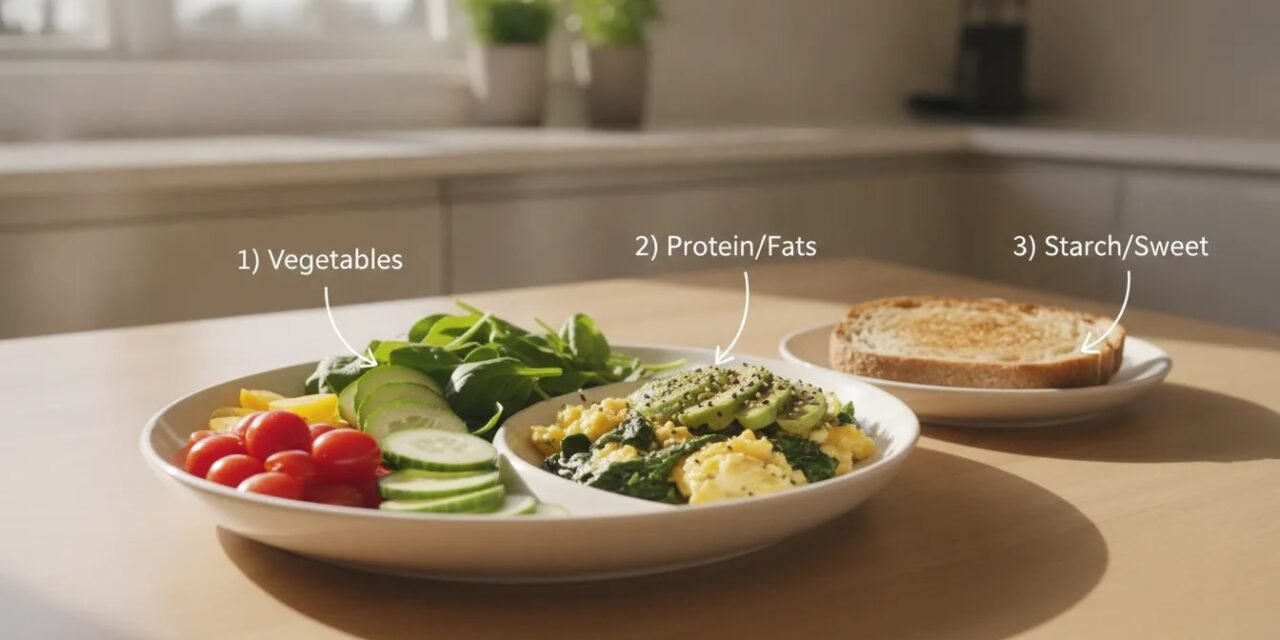
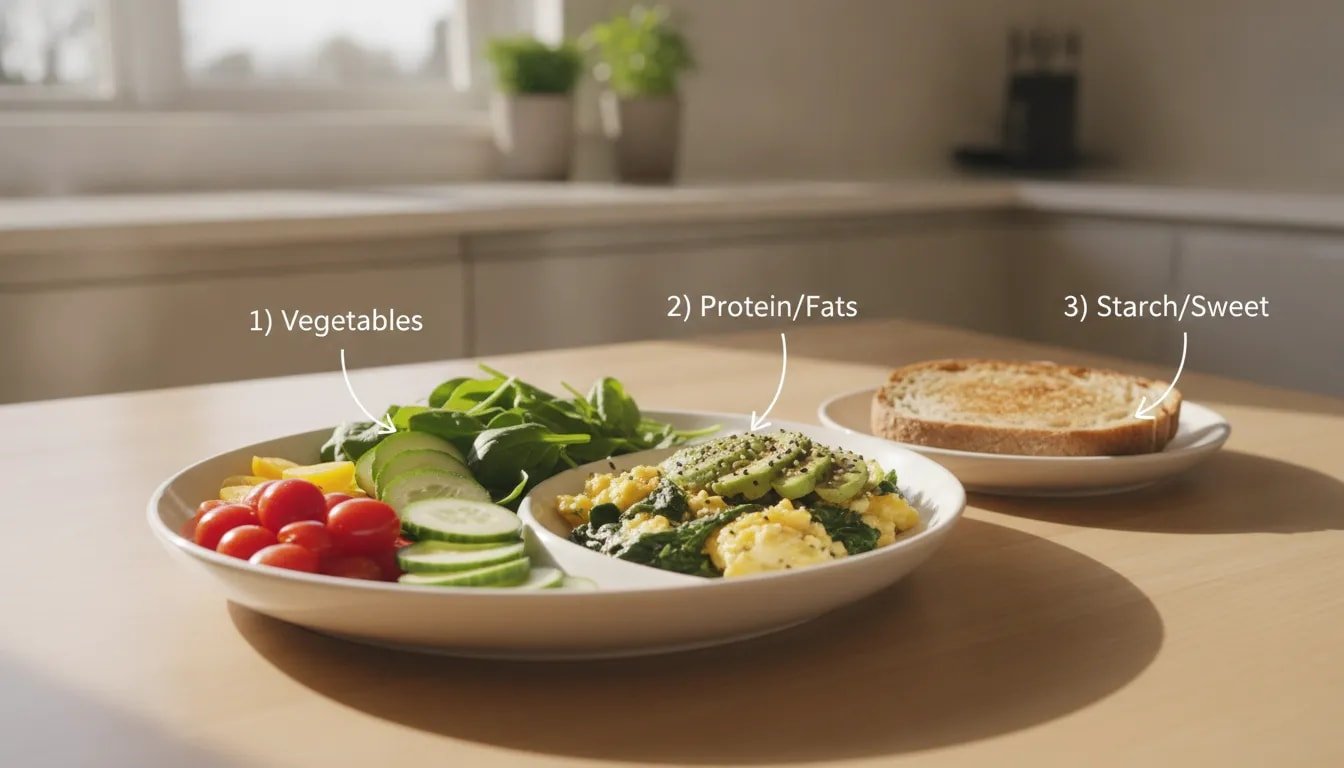
- Eat vegetables first, followed by protein and fats, with starches and sweets later in the meal.
- Pair carbohydrate snacks with protein, fat or fibre instead of eating them alone.
- A short walk or other muscle activity after meals can support steadier glucose levels.
Table of Contents
- What is glucose and what is a glucose spike?
- Why blood sugar stability matters
- The best breakfast for steady energy
- Use food order to reduce the impact of a meal
- Pair carbohydrates with protein, fat or fibre
- Move after meals, even briefly
- Sleep and blood sugar can affect each other
- Vinegar before a high-carbohydrate meal
- How to spot hidden sugars in packaged foods
- Whole fruit is different from juice, smoothies and dried fruit
- Stop treating calories as the only measure of health
- Common blood sugar mistakes to avoid
- When to seek medical support
- A simple seven-day blood sugar reset
- Key takeaway
What is glucose and what is a glucose spike?
Glucose is a form of sugar used by cells throughout the body for energy. Muscles use it when they contract, and brain cells use it as they work. Dietary starches and sugars are key sources of glucose, including foods such as bread, pasta, rice, potatoes, oats, fruit, sweets and sugary drinks.
A glucose spike is a rapid rise in blood glucose after eating, often followed by a fall. On a continuous glucose monitor, it can look like a steep hill followed by a drop.
Not everyone needs to wear a glucose monitor to make helpful food changes. For many people, the more practical signs of an unstable pattern are:
- Energy crashes after meals
- Persistent tiredness or brain fog
- Strong cravings for sweet foods
- Feeling unusually hungry soon after eating
- Afternoon slumps that lead to more caffeine or snacks
- Feeling irritable or “hangry” when meals are delayed
These symptoms can have many causes, so they should not be treated as proof of a blood sugar issue. Persistent fatigue, unexplained symptoms or concerns about diabetes deserve medical advice.
Why blood sugar stability matters
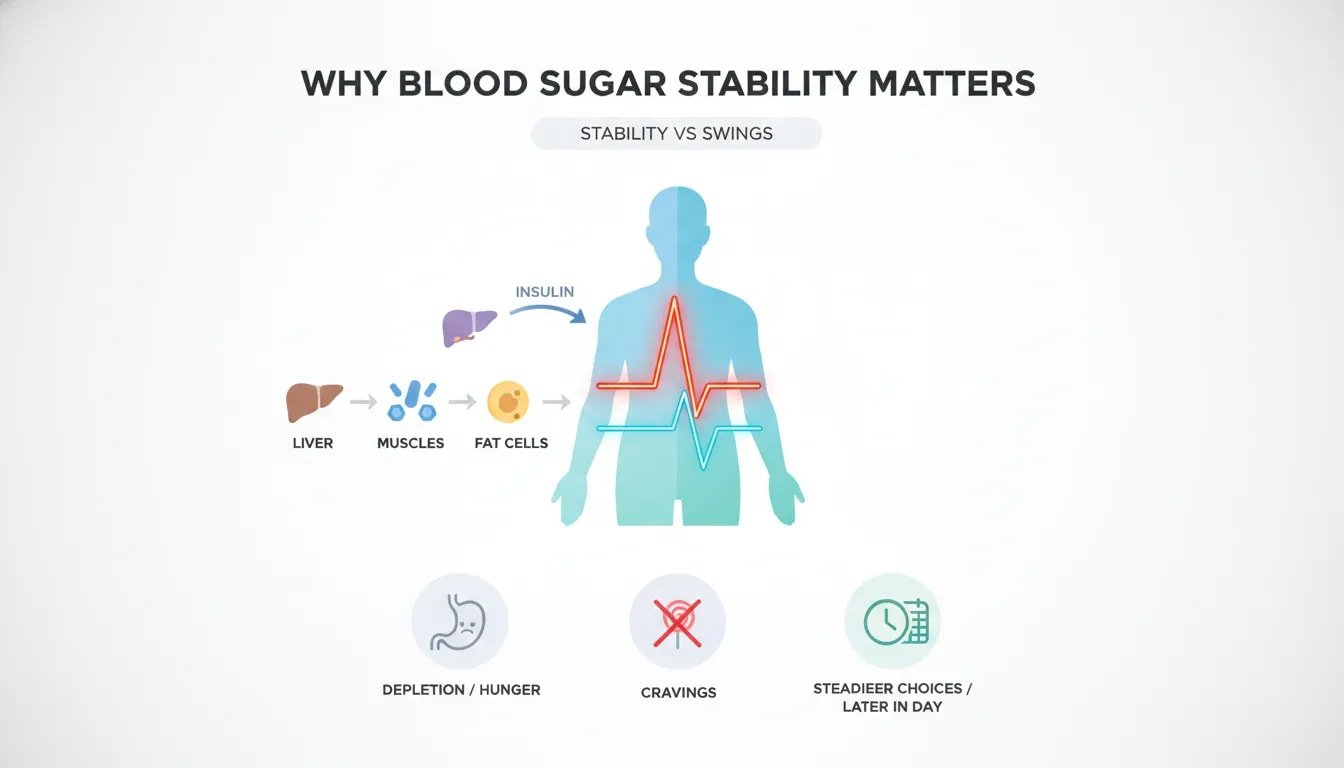
Very rapid rises in glucose require the body to respond. Insulin, a hormone made by the pancreas, helps move glucose out of the bloodstream and into the liver, muscles and fat cells for storage or use.
The concern is not that glucose itself is harmful. The body needs it. The practical concern is frequent, dramatic swings that can leave a person feeling depleted, hungry and less able to make deliberate food choices later in the day.
Blood sugar management is often discussed in relation to energy, cravings and long-term metabolic health. It may also sit alongside other important foundations, including adequate sleep, regular movement, stress support and treatment for existing health conditions.
Glucose, cravings and the crash cycle
After a high-sugar or high-starch food on an empty stomach, a rapid increase may be followed by a rapid decrease. That drop can intensify the urge to find fast energy, often in the form of sweet foods.
This is why cravings are not always a simple lack of discipline. A pattern of sweet breakfast, mid-morning snack, energy crash and afternoon sugar craving can become self-reinforcing. Changing the first meal of the day is often a useful place to interrupt it.
The best breakfast for steady energy

Many common breakfast foods are built mainly around starch and sugar: cereal, fruit juice, smoothies, sweetened oats, pastries, toast with sweet spreads and low-sugar products made primarily from rice or refined grains.
“No added sugar” does not mean a food will have no effect on glucose. A cereal can contain little table sugar but still be rich in starch, which is broken down into glucose. Likewise, juice, dried fruit and smoothies can deliver a concentrated amount of sugar quickly.
A more glucose-conscious breakfast is savory and protein-centred, with healthy fats and optional starch for enjoyment and satiety.
Simple savory breakfast ideas
- Eggs with vegetables, avocado and a slice of bread
- Tofu scramble with greens and beans
- Greek yogurt with berries, nuts and seeds
- Leftover fish or chicken with vegetables
- Cheese, vegetables and sourdough toast
- A protein-rich breakfast bowl with vegetables and olive oil
Whole fruit can still fit into breakfast. The key distinction is between whole fruit, which retains its fibre structure, and juice or heavily blended fruit, which is easier to consume quickly and may be less filling.
Do sweet breakfasts need to be banned?
No. An all-or-nothing approach can make eating feel unnecessarily restrictive. If you enjoy a pastry, biscuits or another sweet breakfast food, consider having it after lunch or dinner rather than as the first food of the day.
Eating sweet or starchy foods after a meal that includes vegetables, protein and fat may slow how quickly glucose enters the bloodstream compared with eating the same food alone on an empty stomach.
Use food order to reduce the impact of a meal
One of the simplest habits is to change the sequence of your meal rather than the entire meal itself. Start with non-starchy vegetables, then eat protein and fats, and leave starches or sweet foods until later.
The reasoning is straightforward: fibre from vegetables may help slow digestion and the absorption of glucose from the foods that follow. Research discussed on this topic has found that meal order can substantially reduce the glucose response to the same foods.
A practical food-order framework
- Start with vegetables: salad, tomatoes, carrots, cauliflower, broccoli, green beans or other vegetables you enjoy.
- Continue with protein and fats: fish, eggs, tofu, meat, yoghurt, cheese, beans, nuts, avocado or olive oil.
- Eat starches last: bread, rice, pasta, potatoes, dessert or other sweet foods.
You do not need to separate every item on the plate perfectly. The easiest version is simply to add a small vegetable starter before the meal. It might be a salad with dressing, a few baby carrots, or leftover roasted vegetables.
This approach also applies in restaurants. Instead of eating the bread basket while very hungry, begin with a salad or vegetable starter, then enjoy bread alongside or after the main meal.
Pair carbohydrates with protein, fat or fibre
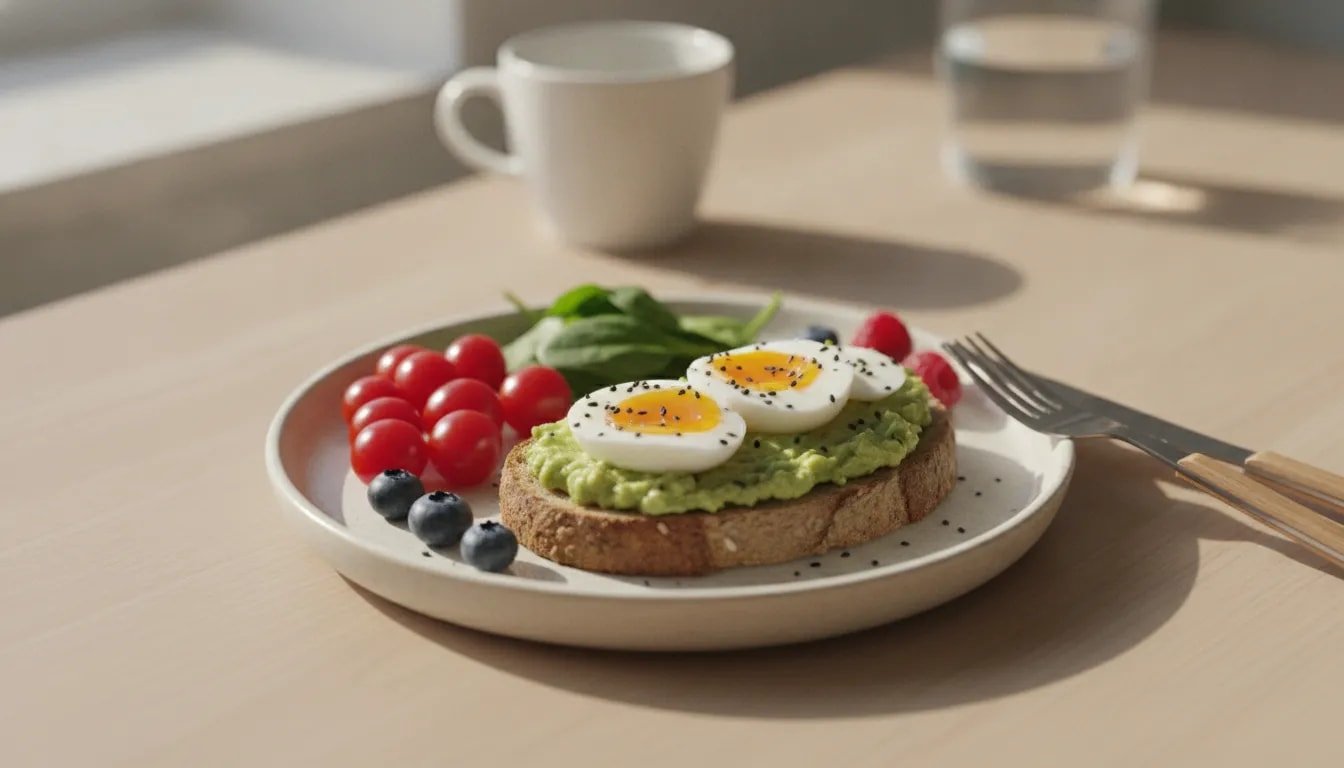
A useful rule for snacks is to avoid eating carbohydrate foods “naked”. In other words, pair a starchy or sweet food with a source of protein, fat or fibre rather than eating it on its own.
Pairing does not turn every snack into a low-glucose food, but it can make a snack more balanced and satisfying.
Examples of better-balanced snacks
- Toast with avocado, cheese or eggs instead of toast alone
- A biscuit with Greek yoghurt or a small handful of nuts
- A banana with nut butter
- Berries with yoghurt
- Apple slices with cheese or nuts
- Crackers with hummus
The same principle can help with pre-workout food. For a demanding workout, easily accessible carbohydrate can be useful fuel. Rather than relying on very concentrated sweet foods, try options such as sourdough with avocado, a banana with nut butter, yoghurt with berries, or almonds alongside fruit. Individual needs differ, so performance, comfort and training intensity should guide the choice.
Move after meals, even briefly
Muscles use glucose when they contract. That makes post-meal movement a practical tool for using some of the glucose from food.
A formal workout is not required. Aim for around 10 minutes of movement after one meal each day. Useful options include:
- A brisk walk
- Walking the dog
- Tidying the house
- Calf raises at a desk
- Playing actively with children
- Light cycling or weight training
On a poorly slept day, even a short bout of exercise, such as five minutes of simple bodyweight movement, can be a practical reset before eating. The aim is not punishment or earning food. It is to use the body’s muscles as part of normal glucose management.
Sleep and blood sugar can affect each other
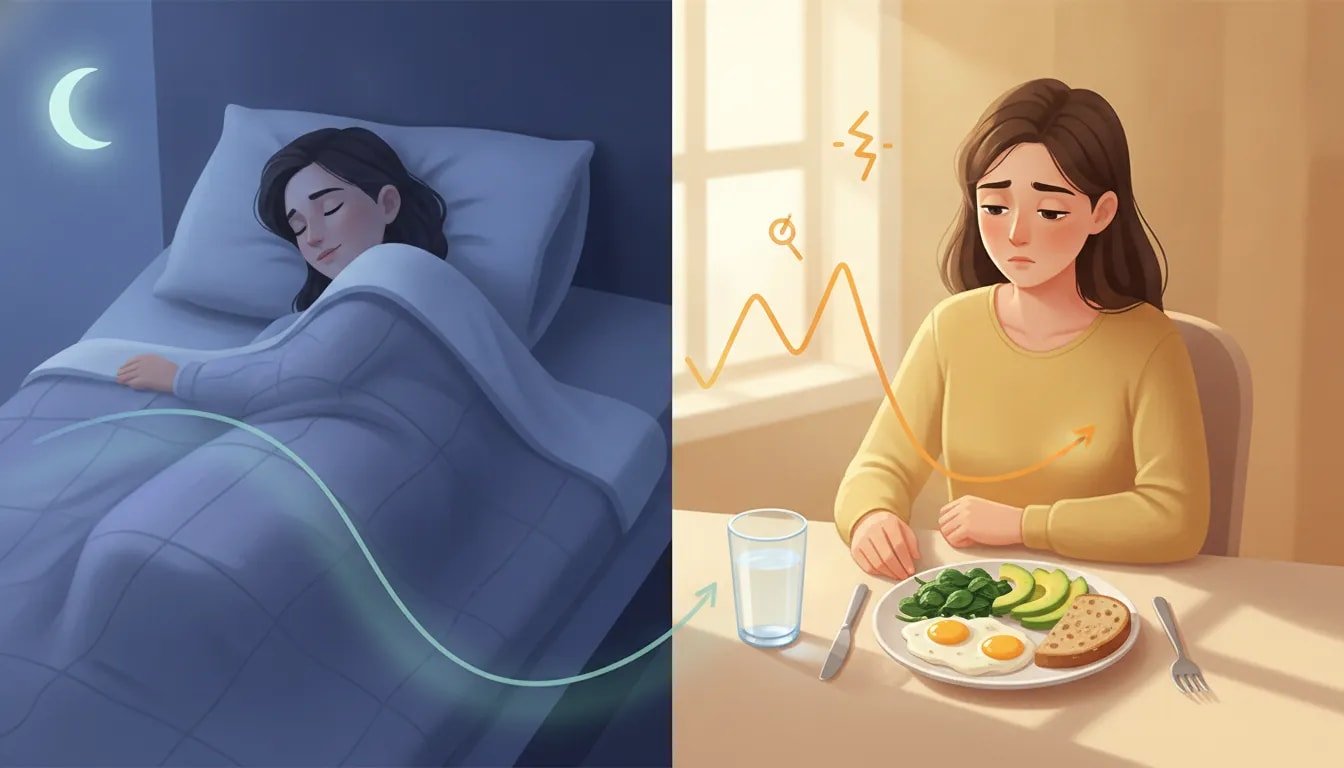
Sleep and glucose regulation can create a difficult loop. Poor sleep may increase cravings for sweet foods and make the body less able to regulate glu
cose effectively. The same food may produce a larger rise on a day of exhaustion than on a well-rested day.
In turn, a day of large glucose swings may make it harder to get deep, restorative sleep. For some people, waking at night feeling sweaty, anxious or with a racing heart may warrant a discussion with a healthcare professional rather than self-diagnosis.
To break the cycle after poor sleep, focus on basics that reduce decision fatigue:
- Eat a savory, protein-based breakfast.
- Do a short amount of movement early in the day.
- Do not skip meals and then attempt to “make up” for them with snacks.
- Choose balanced meals rather than chasing energy with sugar alone.
Vinegar before a high-carbohydrate meal
Vinegar contains acetic acid, which may slow how quickly food is broken down into glucose. A practical approach is to use one tablespoon of vinegar diluted in a large glass of water about five to ten minutes before the day’s most carbohydrate-heavy meal.
It can also be easier to use vinegar as part of a vinaigrette on a vegetable starter. This combines vegetables first with the flavour and acidity of vinegar.
Do not take vinegar as an undiluted shot. Undiluted vinegar can be harsh on tooth enamel and may aggravate reflux or digestive discomfort. Skip it if it does not agree with you, and seek personalised advice if you use medication or have a health condition.
How to spot hidden sugars in packaged foods
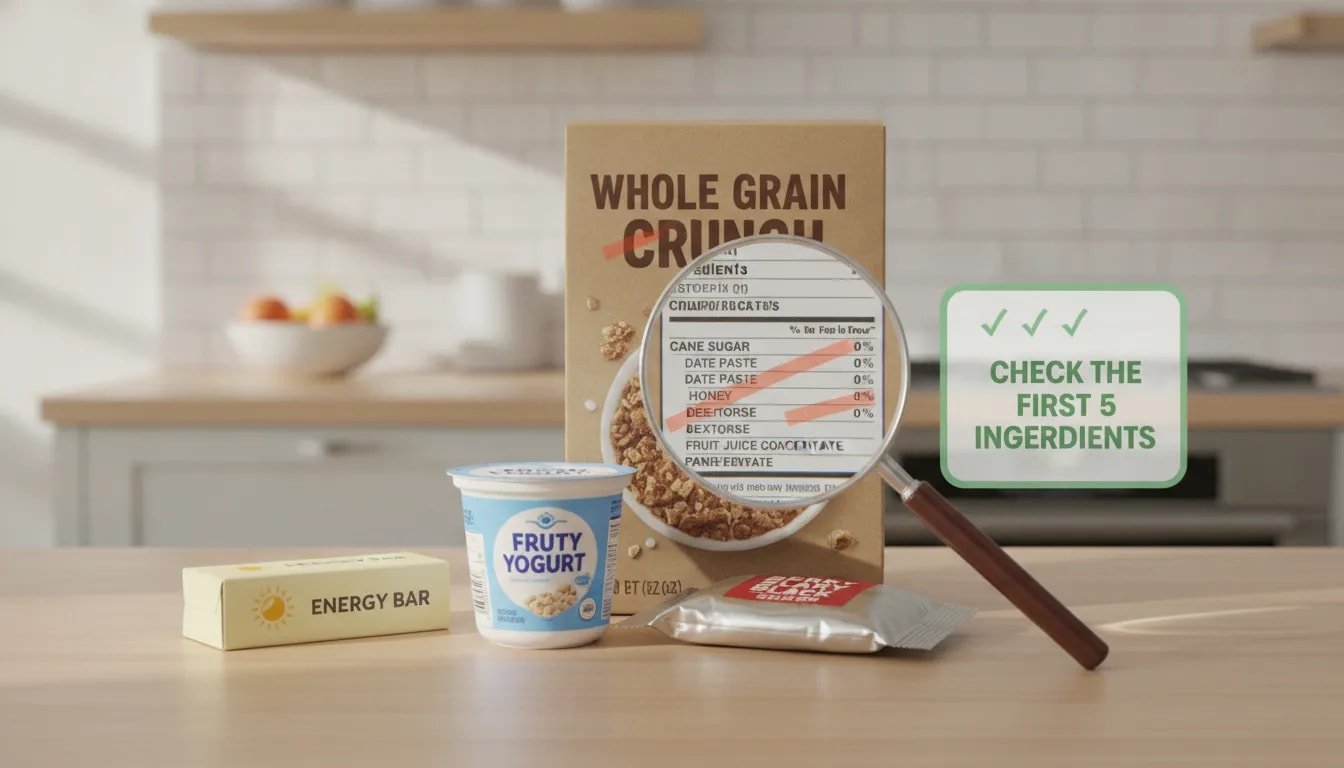
Packaging claims such as “natural”, “low sugar” or “protein” can distract from the ingredient list. Ingredients are generally listed in order of weight, so the first few ingredients provide a quick picture of what a product is largely made from.
When choosing protein bars, flavoured yoghurts, cereals or snack foods, look for forms of sugar among the first five ingredients. These may include:
- Sugar or cane sugar
- Honey
- Date paste or date puree
- Dextrose
- Fruit juice concentrate
- Syrups
If a sugar source appears near the beginning of the list, consider treating the product more like a dessert than an everyday protein snack.
Whole fruit is different from juice, smoothies and dried fruit
Fruit does not need to be feared. Whole fruit is generally a more balanced sweet choice because its natural fibre remains intact. It is also usually more satisfying than sweets or baked desserts.
The issue is degree of processing and concentration. Juicing removes much of the fibre, while blending breaks fruit into a form that can be consumed rapidly. Dried fruit also concentrates the sugar from multiple pieces of fruit into a small volume.
For steadier energy, prioritise whole fruit over fruit juice, smoothies and large amounts of dried fruit. If you choose a smoothie, consider having it alongside a protein-rich meal rather than on its own first thing in the morning.
Stop treating calories as the only measure of health
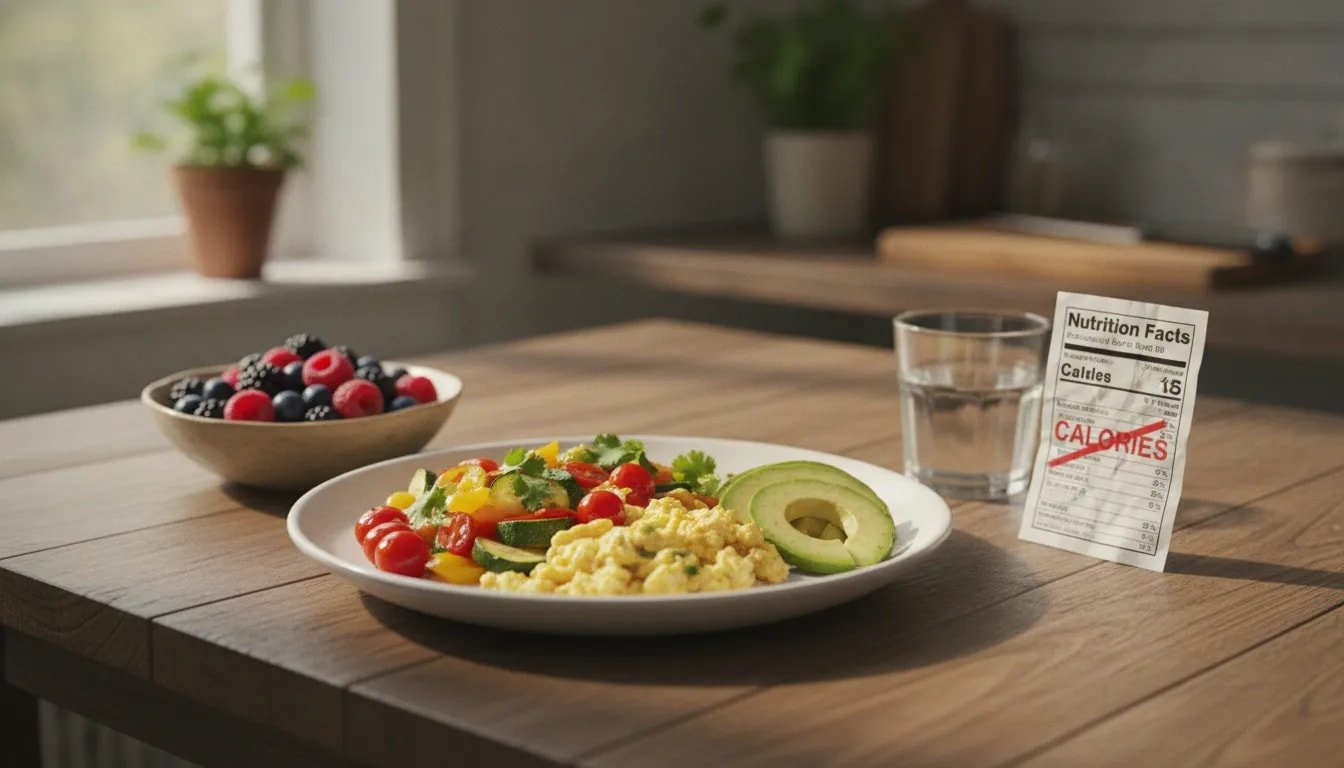
Calories describe the energy in food, but they do not tell the full story of how a food affects hunger, energy, glucose response or overall nutrition.
Two meals can contain a similar number of calories while offering very different combinations of protein, fats, fibre and rapidly absorbed carbohydrates. A calorie target alone may therefore overlook important questions:
- Does the meal include fibre-rich vegetables?
- Is there enough protein to make it satisfying?
- Is the food primarily refined starch or added sugar?
- Will it be eaten alone, or with protein, fat and fibre?
- Does the eating pattern leave you energised, hungry or craving more food soon after?
Rather than obsessing over calorie totals, become a more informed food detective. Look at ingredients, food structure and how meals are composed. Body weight alone is not a complete measure of internal health.
Common blood sugar mistakes to avoid
- Replacing breakfast with juice or a fruit smoothie: it may feel healthy but can be a concentrated source of rapidly consumed sugar.
- Assuming no added sugar means no glucose response: refined starches can still raise blood glucose.
- Eating bread, biscuits or fruit alone when very hungry: pair them with protein, fat or fibre.
- Going from a high-carb diet to zero carbohydrates overnight: abrupt restriction can be difficult and unnecessary for many people.
- Using undiluted vinegar: dilute it, use it in a dressing, or skip it if it causes discomfort.
- Relying on supplements before food habits: meal composition, food order and movement are the foundation.
- Over-tracking every metric: data can be useful, but it should not replace attention to how you actually feel.
When to seek medical support
Nutrition habits can support health, but they are not a replacement for diagnosis or treatment. If you have type 2 diabetes, take glucose-lowering medication, are pregnant, have a history of disordered eating, or experience symptoms such as recurrent dizziness, fainting or severe fatigue, make changes with a clinician.
Type 2 diabetes can improve substantially for some people, and remission may be possible in appropriate circumstances, but medication changes and treatment decisions should always be made with a doctor. The NHS guide to type 2 diabetes provides a useful starting point for recognising symptoms and finding support.
A simple seven-day blood sugar reset
Start with small, repeatable habits rather than attempting to overhaul every meal at once.
- Day 1: Eat a savory, protein-focused breakfast.
- Day 2: Add vegetables before lunch or dinner.
- Day 3: Take a 10-minute walk after one meal.
- Day 4: Pair your usual carbohydrate snack with protein, fat or fibre.
- Day 5: Swap juice or a smoothie for whole fruit.
- Day 6: Check the first five ingredients of your most common packaged snack.
- Day 7: Have a favourite sweet food after a balanced meal instead of on an empty stomach.
These habits do not require calorie counting, complete carbohydrate avoidance or a perfect diet. They are designed to make meals more supportive of steady energy, fewer cravings and a more flexible relationship with food.
Key takeaway
Blood sugar stability is not about fearing food. Build meals around vegetables, protein and healthy fats, eat starches and sweets later in the meal, pair carbohydrates with other nutrients, and move after eating when possible. Start with one change, repeat it until it feels ordinary, and build from there.
|
Frequently Asked Questions
Do I need a continuous glucose monitor to reduce blood sugar spikes?
No. A monitor can provide useful personal data, but food order, balanced meals, post-meal movement and better sleep habits can be used without one. Avoid letting tracking create stress or disconnect you from how you feel.
Can I still eat bread, pasta and dessert?
Yes. Rather than eliminating them completely, eat vegetables first, include protein and fats in the meal, and have starches or sweets towards the end. Dessert is generally a more balanced choice after a meal than alone on an empty stomach.
Is fruit bad for blood sugar?
Whole fruit can be part of a balanced diet because it retains fibre. Juice, smoothies and dried fruit are more concentrated or easier to consume quickly, so they may be more likely to create a rapid rise when eaten alone.
What should I eat when I have an afternoon energy crash?
Look first at breakfast and lunch. Choose a savoury protein-rich breakfast, begin lunch with vegetables, and pair any snack with protein, fat or fibre. A brief walk after eating may also help break the crash-and-craving pattern.