
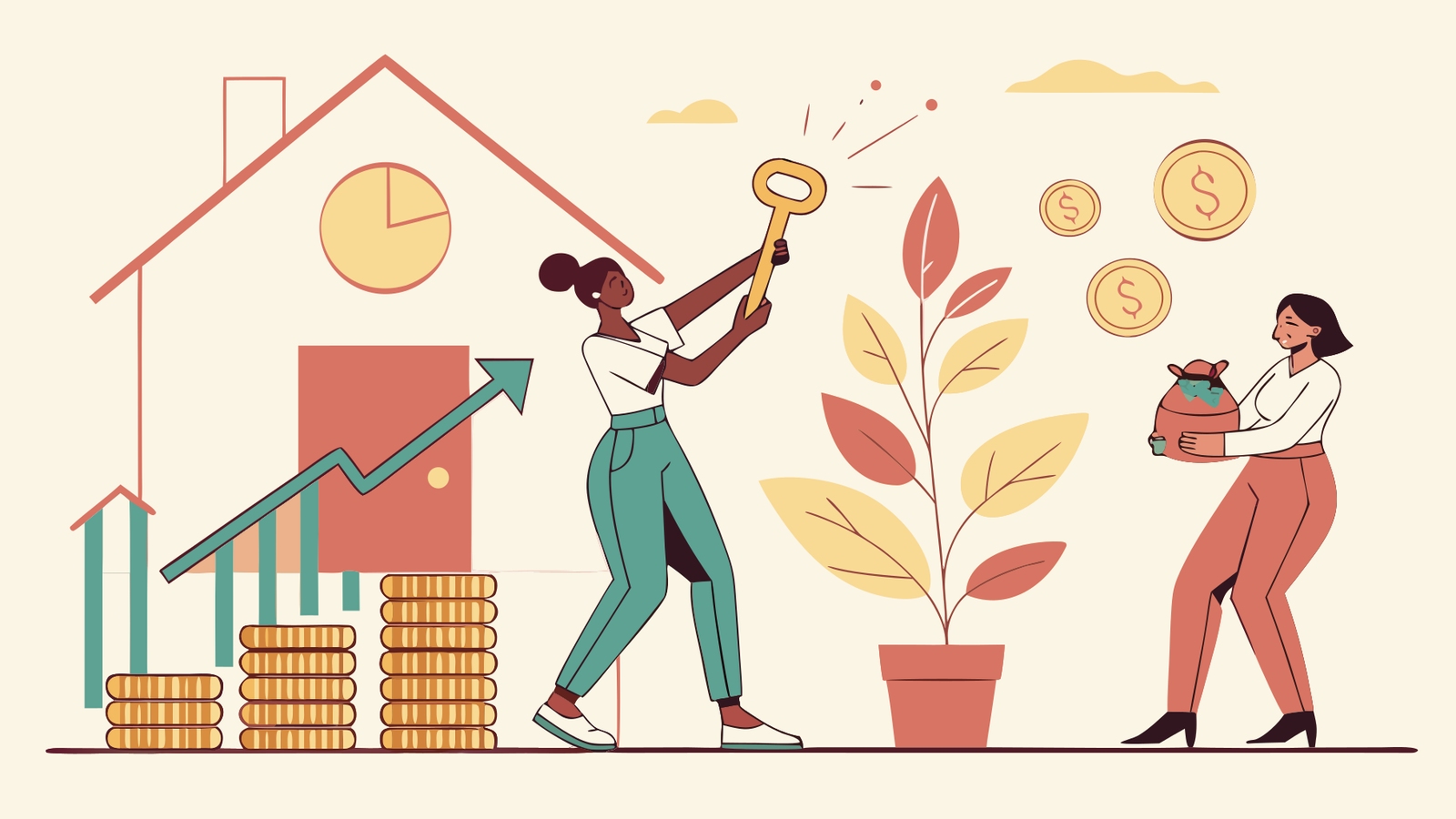
Money shapes every life decision we make. As a banker turned educator, I want to rewrite the conversation about women and wealth so more of us can build, protect, and grow our money with confidence. Right now, women control about 30 percent of global private wealth, and that figure is expected to exceed 50 percent in the next five years. That shift brings huge opportunity — and it also demands better financial literacy, clearer choices and more honest conversations.
Table of Contents
- Why this matters 🔑
- My journey into finance 🌍
- How culture and gender shape our money habits 🌐
- Simple steps to financial independence 🪜
- How to open a brokerage account 🧾
- Different financial models explained 🧭
- AI, bias and why women should use technology 🤖
- Practical examples that illustrate the risk of inaction 📉
- How I teach finance to make it less intimidating 🎓
- Final note on why financial independence matters ❤️
- FAQ ❓
Why this matters 🔑
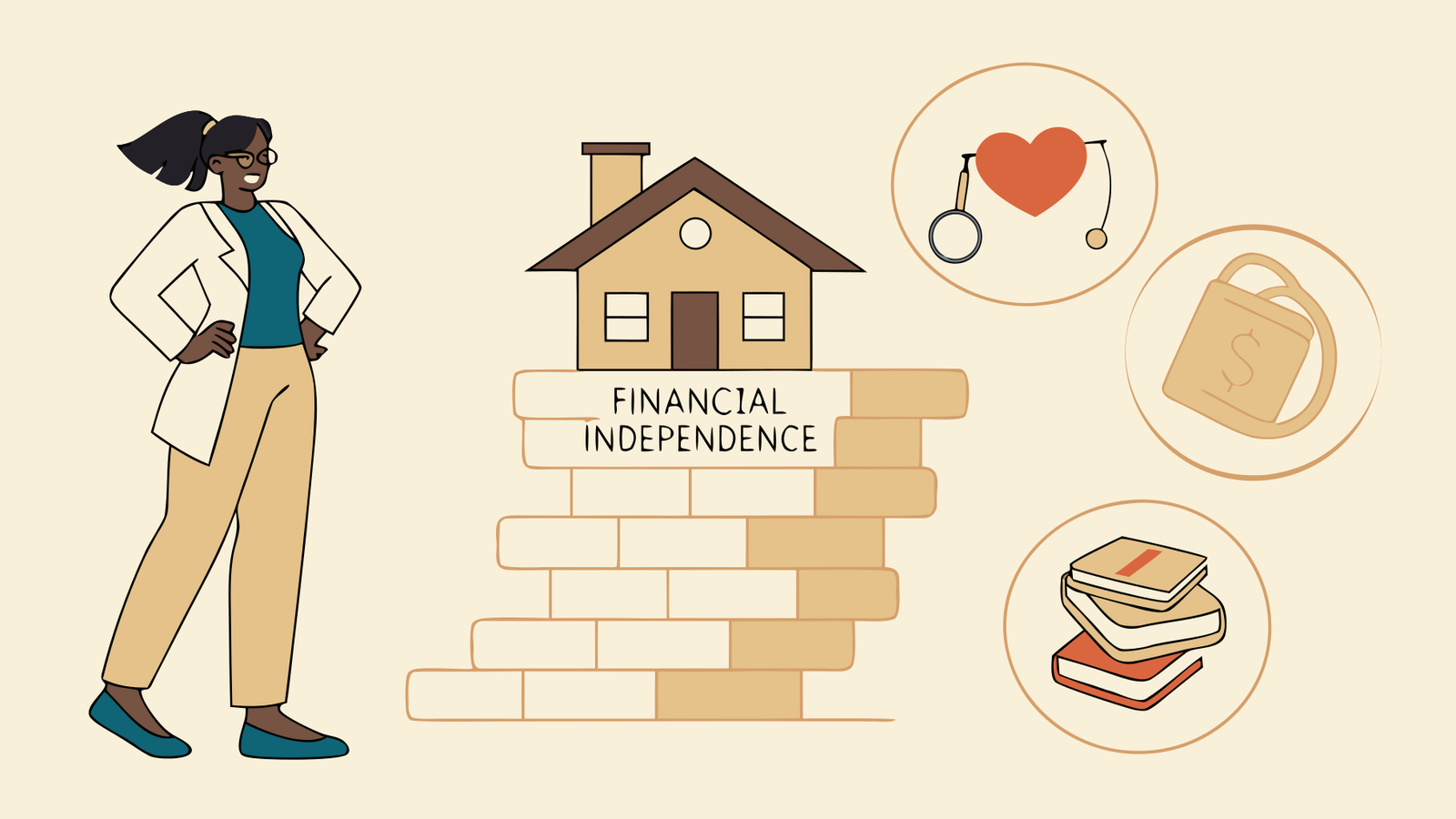
Financial independence is not an optional extra. It is the foundation for the life you want: where you live, whether you can take time off for family or health, how you fund your children’s education and what you can leave to the next generation.
Consider these headlines:
- Women control roughly 30 percent of private wealth today and are on track to control more than half in the near future.
- Eight out of ten women avoid money conversations because they feel uncomfortable or underinformed.
- Two thirds of the so called great wealth transfer will pass through women as wives and daughters inherit capital.
- Today only about one third of worldwide capital allocation is in the hands of women. That will change, and we need to get ready.
My journey into finance 🌍
I grew up in a banking family and carried two messages early on: work in finance and do not be dependent on a man. Those ideas took me from Europe to Asia — Luxembourg, Frankfurt, Zurich, Hong Kong and Singapore — working in private banking and wealth management. As an expat in my 30s I kept getting the same question over drinks from friends: so I have some savings, what do I actually do with this money?
You will never be dependent on a man.
That simple prompt led me to create HerFinancialFreedom: short, practical workshops where women could learn finance together, break the taboo around talking money and get a structured path to financial confidence.
How culture and gender shape our money habits 🌐

Attitudes toward money vary by country and by upbringing. In some cultures discussing salaries or wealth is taboo. In others, financial success is openly celebrated. Those cultural cues influence how women see risk, negotiation and investing.
Patterns I see again and again:
- Women are often taught to treat money as a safety net. That makes many of us excellent savers but not always strategic investors.
- Men are socialised to take more financial risks earlier. That partly explains why men start businesses and invest in stocks at younger ages.
- In some countries being wealthy is treated with suspicion, which creates limiting beliefs for people who succeed financially.
Those social scripts matter because they shape action. We cannot fix outcomes without changing the conversation.
Simple steps to financial independence 🪜

Start small, start early and keep going. Here is a practical progression you can follow whether you are 20, 40 or 70.
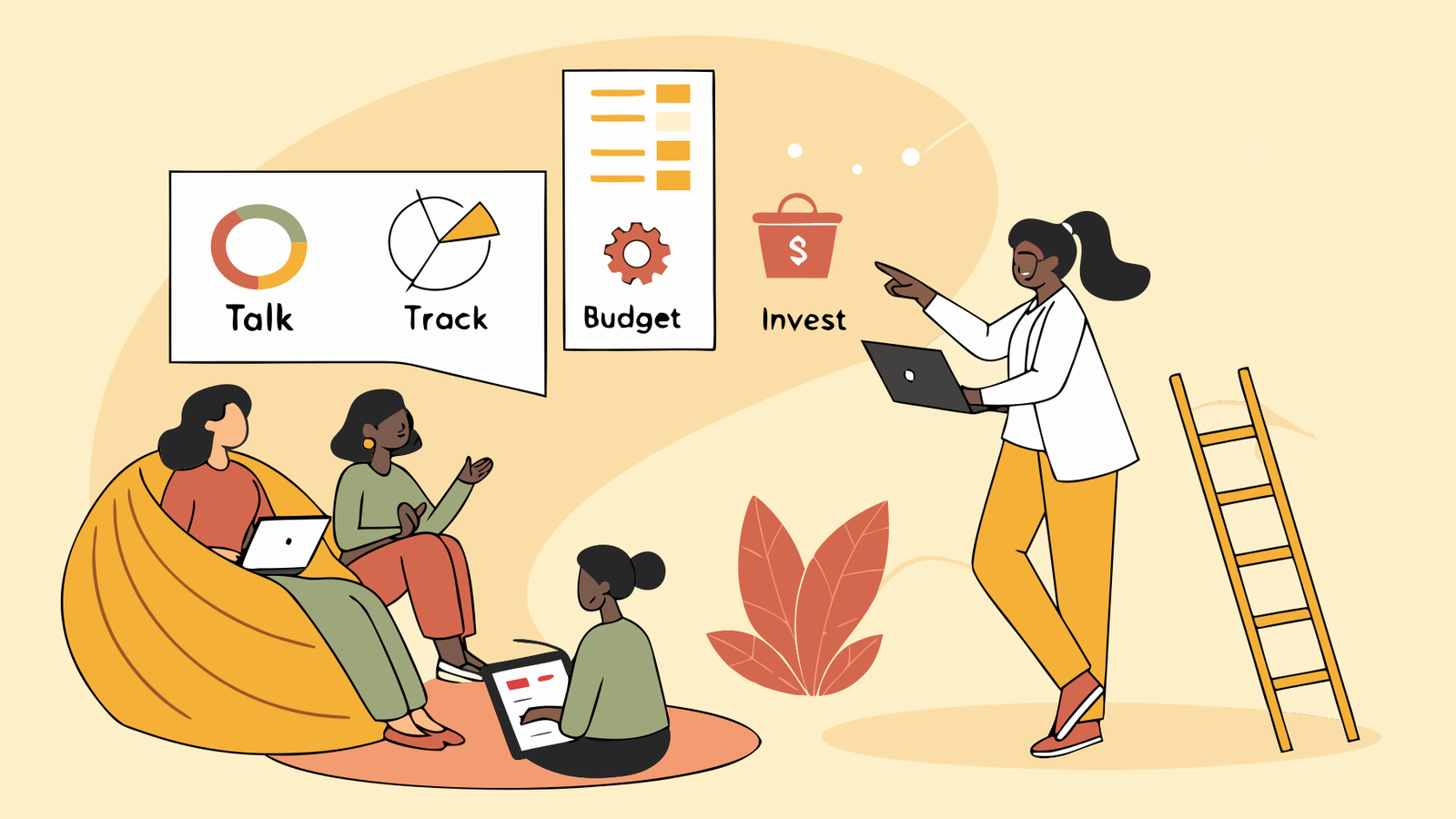
- Talk about money. Find safe spaces, friends or online communities to share questions and experiences. Conversation builds confidence.
- Take stock. Use a finance tracker to list what you own, what you owe and how you spend. Awareness is the first step to control.
- Budget with purpose. Pair your spending review with life priorities. A budget should feel empowering. Decide what matters and align money to those goals.
- Start investing. Even tiny regular amounts compound dramatically over time. Twenty or fifty dollars a month into a simple exchange traded fund can make a big difference over decades.
- Choose the right financial model for you. You can manage money yourself with an online broker, work with a financial advisor, use a wealth manager or try a robo-advisor. Each model has trade offs in cost, control and convenience.
How to open a brokerage account 🧾
A brokerage account gives you legal access to capital markets so you can buy stocks, bonds and funds. Think of the broker as the licensed gatekeeper that holds your account and executes trades on your behalf.
Key pointers:
- Open a broker in the country where you live to begin. Search for reputable local platforms and compare fees and services.
- You can open multiple brokerage accounts across jurisdictions for diversification if your wealth or needs grow.
- Compare fees, licensing and regulation. Make sure the broker is authorised by financial regulators in its home country.
Different financial models explained 🧭
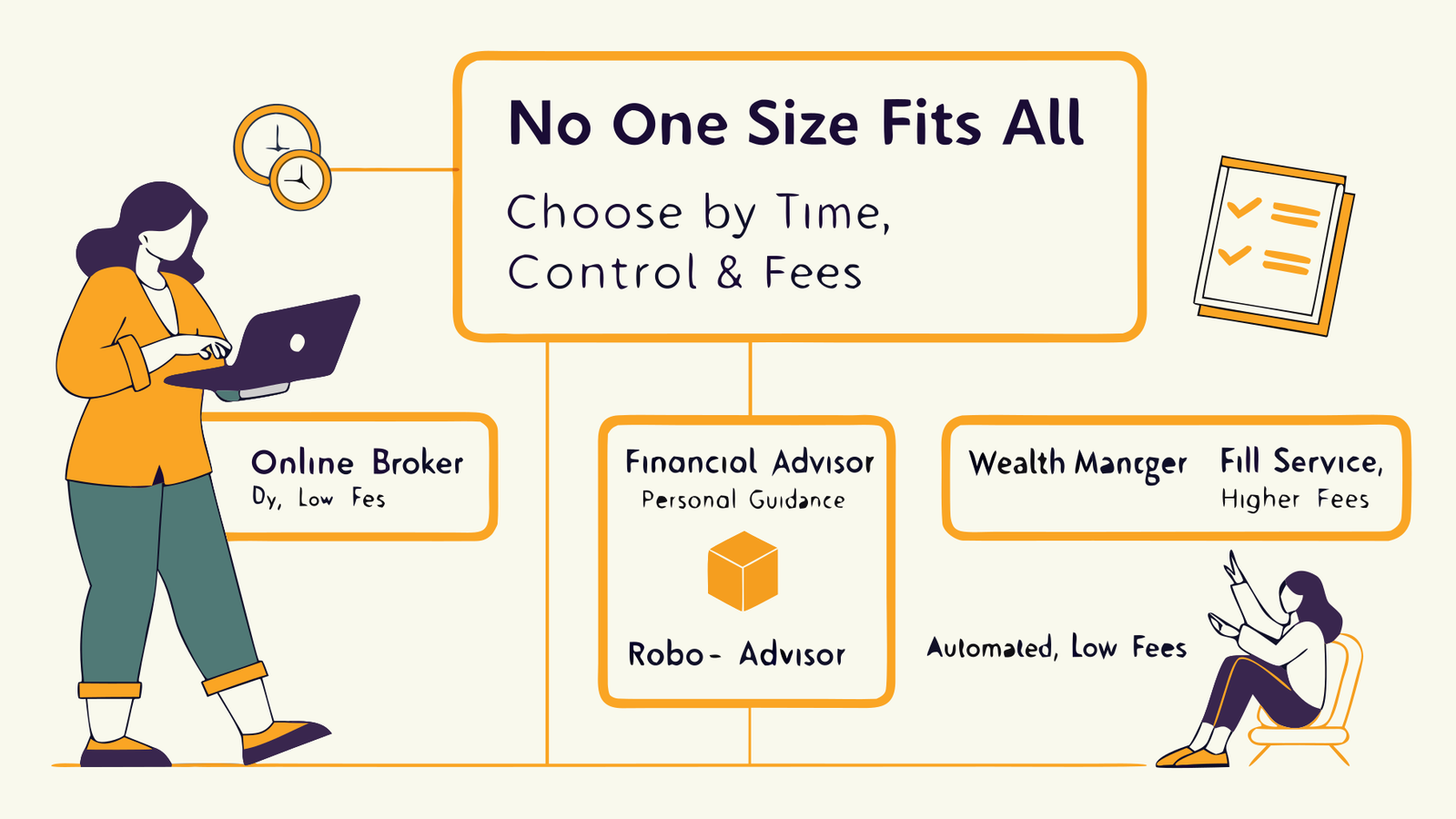
There is no one size fits all. Choose according to how much time you want to spend, how much control you want and how much you can pay in fees.
- Online brokers Hand on the wheel. You research and execute your own investments. Cost efficient but requires learning.
- Financial advisors Personalised guidance. You get a human to review your situation and recommend choices. Fees vary.
- Wealth managers Full service. You hand over a lump sum and a strategy. Useful for larger portfolios but trust and fees are crucial to evaluate.
- Robo-advisors Algorithmic management. Lower fees and automated portfolios. Check regulation and the model behind the recommendations.
AI, bias and why women should use technology 🤖
AI lowers barriers by making financial tools cheaper and more accessible. Robo-advisors and automated research tools can make investing easier. However AI systems reflect the data and people who build them. If most contributors are male, the models can learn male-centric patterns and amplify bias.
That is another reason women must be present in the AI conversation. Use AI tools, ask questions about how they are built and make sure our behaviours and needs are included so future financial technology works for everyone.
Practical examples that illustrate the risk of inaction 📉
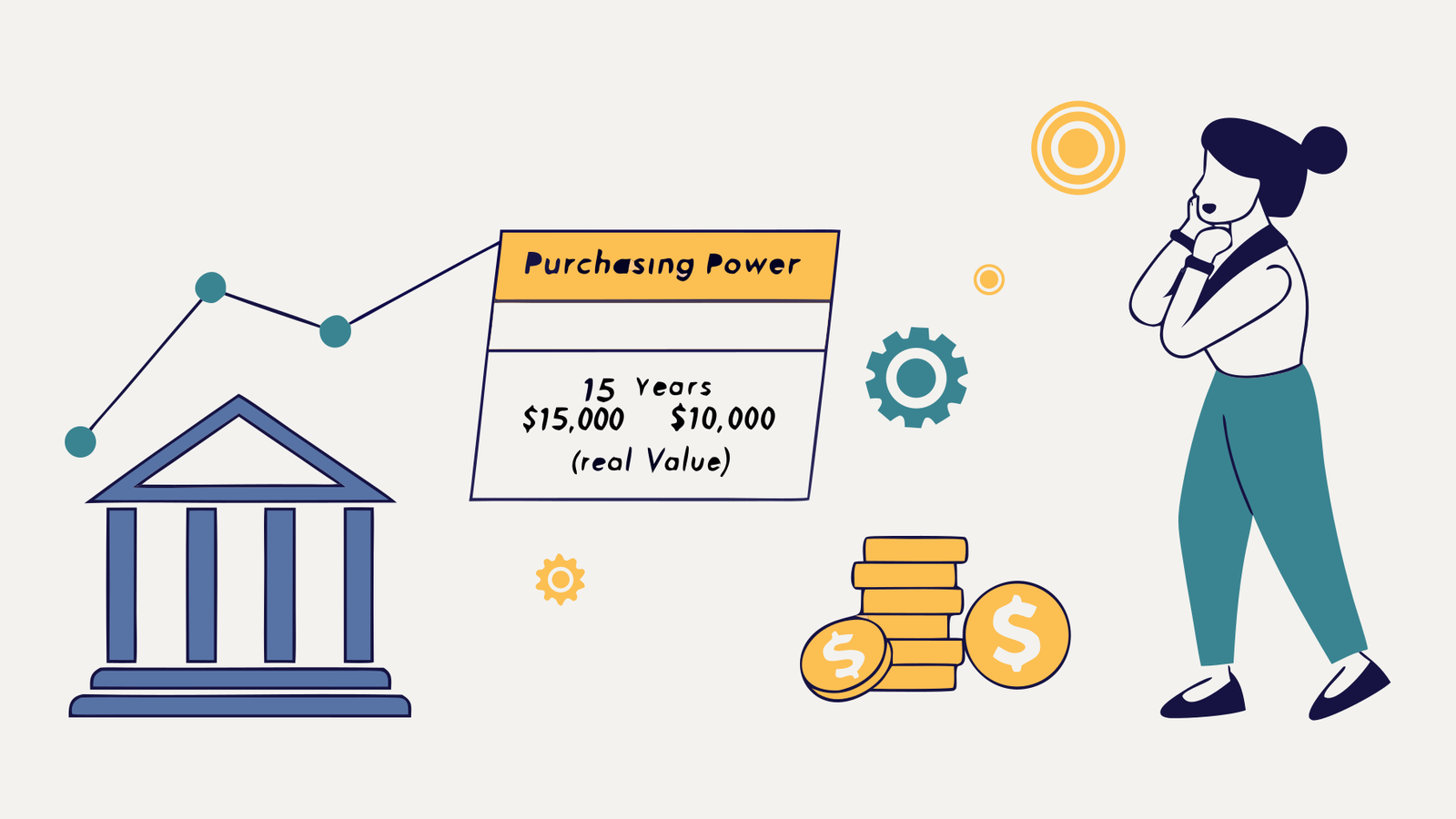
Money left in cash loses purchasing power to inflation. A concrete example: if you had 15 thousand in cash 15 years ago in the US, that same amount could be worth closer to 10 thousand today in real terms. It is not that the number on your bank screen changes daily; it is that what that money can buy declines over time.
Investing to generate returns at least offset inflation and, ideally, grow wealth. The earlier you start, the more time compounding has to work in your favour.
How I teach finance to make it less intimidating 🎓
Finance should be fun, motivating and empowering. In my courses we:
- Start conversations in small groups so questions are safe and non-judgemental.
- Break complex topics into simple steps and show how small actions add up.
- Link budgets and investments to personal priorities so money becomes a tool to build the life you want rather than a source of guilt.
Final note on why financial independence matters ❤️
Every dream, goal and choice in life rests on financial reality. Whether you want to travel, change careers, support family, retire early or leave a legacy, money is the mechanism that makes those options possible. Financial independence gives you freedom and agency to choose your path.
FAQ ❓
What is the first step I should take toward financial independence?
How much money do I need to start investing?
What is the difference between an online broker and a robo-advisor?
How does inflation affect money in a bank account?
Is AI safe to use for financial decisions?
For quick checks you can also visit Site archive, Brand story or Industry challenges.
Note: these pages are minimal placeholders and may not contain substantive content.