


Photo by shahin khalaji on Unsplash
Table of Contents
- 🌊 Born Between Worlds
- 🎶 Cairo, Music and a New Name
- 💿 A Voice That Crossed Traditions
- 💍 Royal Constraints and Personal Revolt
- 🎥 Stardom, Scandal and Secret Marriages
- 🕊️ War, Espionage and Double Alliances
- ⚰️ Death, Mystery and Theories
- 🎤 Legacy: A Short, Bright Flame
- ❓ Frequently asked questions
- Further reading
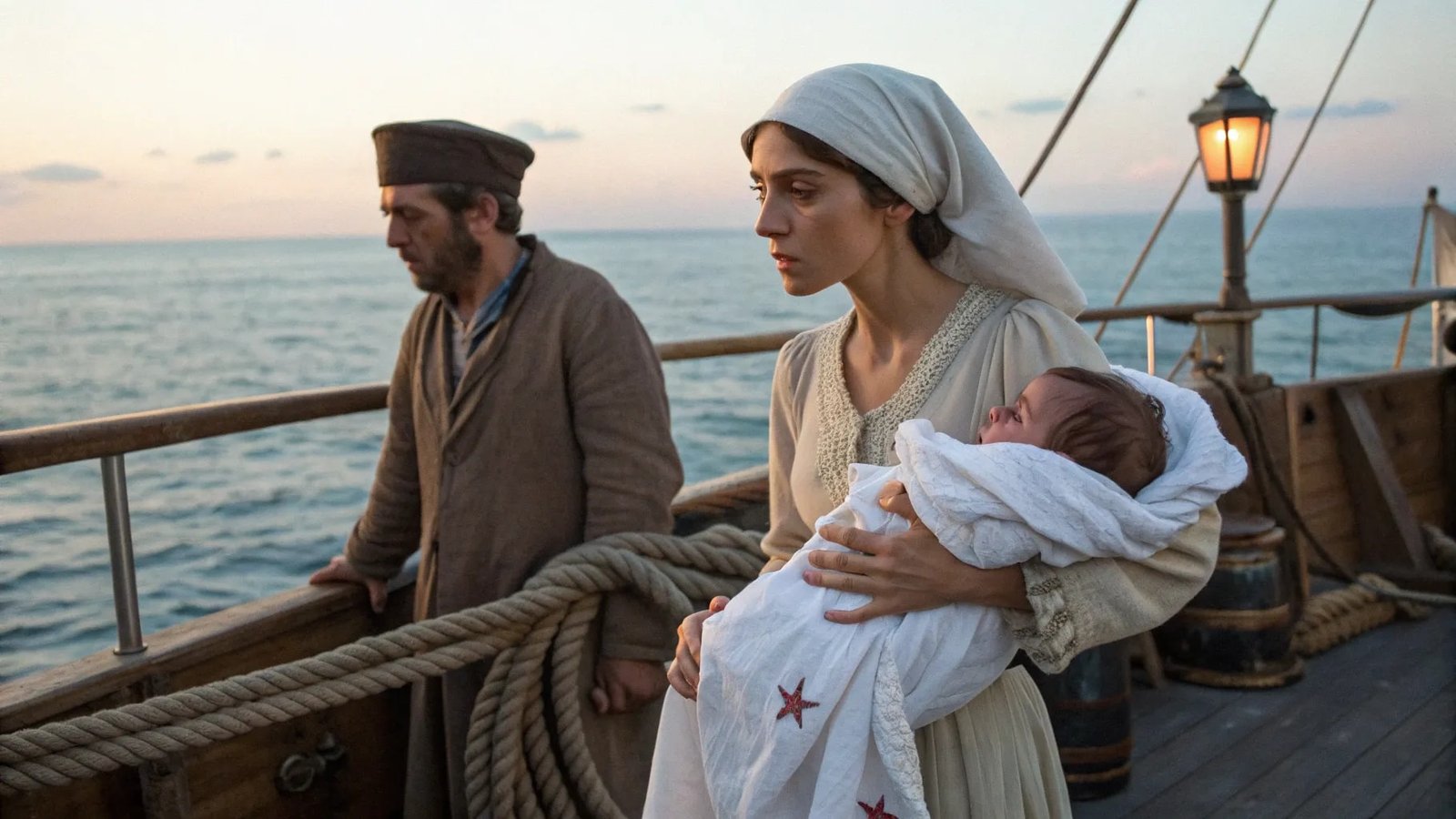
🌊 Born Between Worlds
I was born on a ship in the middle of the Mediterranean Sea, somewhere between Turkey and Lebanon. My parents and my two older brothers were fleeing. The stress of the journey must have sent my mother into early labour. I came into this world on the 25th of November, 1917. They named me Princess Amal Al-Atrash. Amal means hope in Arabic.
Asmahan’s exact year of birth is debated — sources suggest 1912, 1914, 1917 or 1918 — but her grandson places it in 1917. Her dramatic entry into the world mirrored a region unmooring from Ottoman rule. Her father, Prince Fad al-Atrash, supported the Great Arab Revolt and fled to the Druze mountain to avoid Ottoman retribution. The al-Atrash clan had long governed Jabal al-Atrash, the Druze mountain, where strict customs governed daily life, especially for women.
“Your songs will be played for ages to come. Your star will shine bright and it will die fast… in the water, just like you were born.”
🎶 Cairo, Music and a New Name
As a child in Cairo, education and music shaped Amal’s fate. Her mother, who loved the more liberal city life, enrolled the children in a French Catholic school and hosted gatherings where songs flowed. Downtown Cairo in the 1920s and 30s was becoming the Arab world’s artistic hub, and it was here that a chance encounter changed everything.
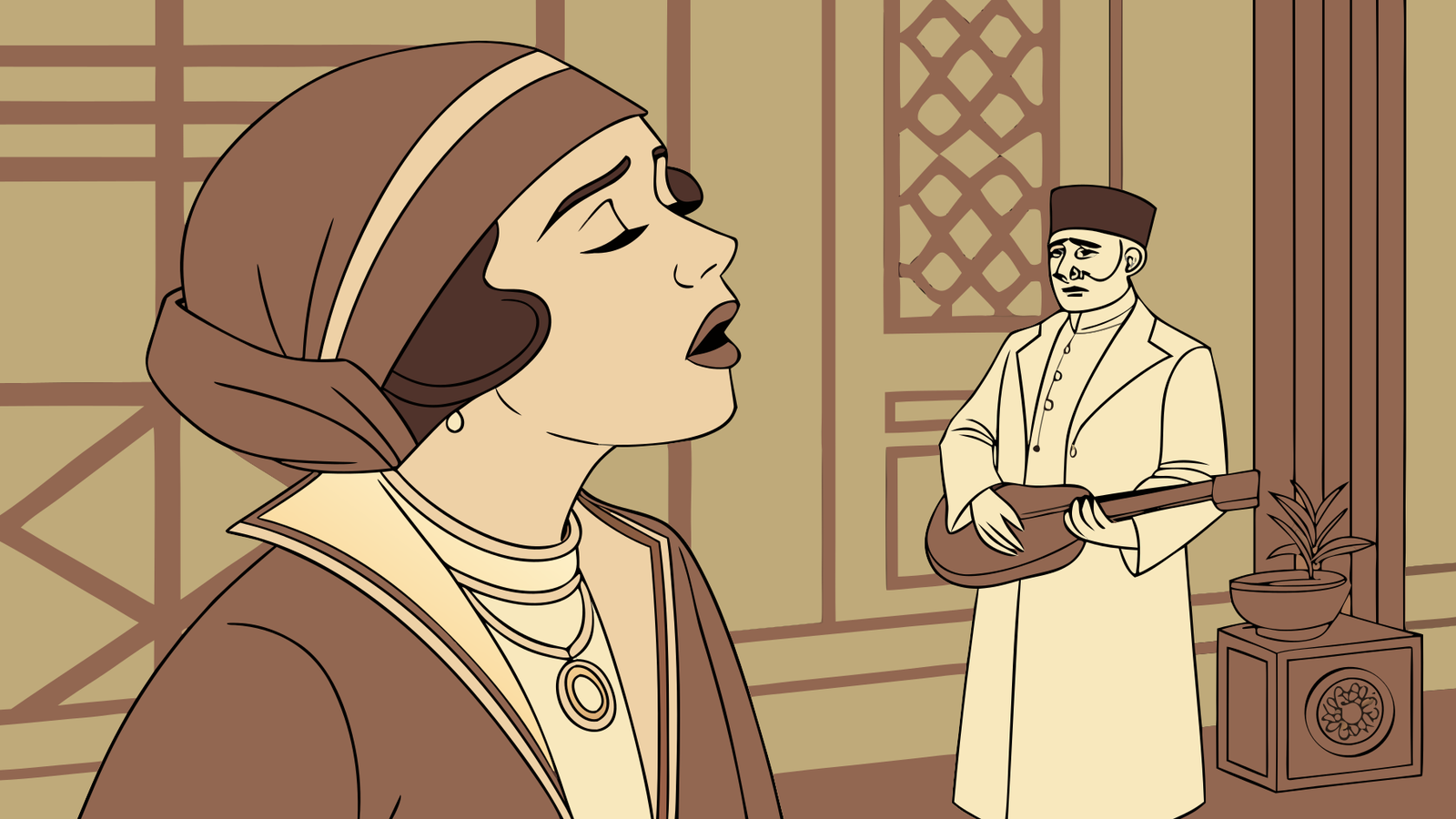
Dawud Hosni, a celebrated Egyptian composer, heard the young Amal sing and was “spellbound.” He gave her training and a new stage name: Asmahan — exalted, sublime, queen of names. Under his guidance and alongside her brother Farid, an accomplished oud player, she joined Cairo’s cultural salons and, by her mid teens, was recording and performing at elite venues including the Cairo Royal Opera House.
💿 A Voice That Crossed Traditions
Asmahan’s voice combined crystalline purity with emotional depth. She mastered complex Arabic maqamat and blended Oriental techniques with Western operatic head voice. She alternated between Western styled passages and traditional tarab within the same song — a rare and striking innovation at the time.
- Signed a 15-record deal with Columbia Records
- Worked with leading composers such as Dawud Hosni, Zakaria Ahmed and Mohamed Abdel Wahab
- Recorded 37 songs during her short career
Her vocal range spanned contralto to mezzo-soprano, and she could sustain high notes for astonishing lengths. Songs like “Yatoujur” and the film recordings “La Yali L’Onsi in Vienna” and “Imta Ha Ta Arof” became classics, even though she would not live to see their enduring fame.
💍 Royal Constraints and Personal Revolt
Asmahan’s rise in Egypt unnerved her conservative family. In 1933 she married Prince Hassan al-Atrash at 16, agreeing to give up public singing in exchange for the marriage. She tried to balance life as a priestly Druze princess and as a modern woman, but Hassan soon broke promises and moved them to the Druze mountain.

Confined, she became restless and depressed. A pregnancy and the birth of her daughter Camellia in 1937 could not soothe the longing for Cairo and the stage. After a suicide attempt by pills, they divorced and Asmahan returned to Egypt to reclaim her voice — leaving her daughter behind with her family.
🎥 Stardom, Scandal and Secret Marriages
Back in Cairo she flourished. She recorded, performed on radio and starred in her debut film Triumph of Youth alongside Farid. She attracted influential friends from outside the entertainment world, including diplomats and high society figures. Her social life, however, invited rumours and jealousy — most famously claims that Queen Nazli resented Asmahan’s closeness to a royal tutor, Hassanin Pasha.
Asmahan’s personal life was turbulent. She married several times — sometimes for love, sometimes for convenience. To re-enter Egypt when wartime restrictions blocked her, she married Ahmed Salim, founder of Studio Masr; she later described that marriage as one for visa purposes rather than affection.

🕊️ War, Espionage and Double Alliances
World War Two placed Asmahan at the centre of high-stakes politics. In 1940 Vichy France controlled Syria. The Allies feared Axis influence in the eastern Mediterranean and sought local allies. The British turned to the Druze and asked Asmahan to deliver a message to Prince Hassan: do not resist Allied forces entering Syria via the Druze mountain.
Asmahan agreed on the condition that Allied cooperation would bring independence. Hassan demanded remarriage as a condition of his cooperation; the family made an exception, and the Allies entered Syria in June 1941 with Druze help. Asmahan welcomed Free French commanders and moved freely between Beirut, Damascus and Jerusalem, enjoying VIP circles while the war continued.
When British promises of Syrian independence failed to materialise and her financial support was cut, Asmahan began to play both sides. She reportedly approached French and German contacts and travelled to Turkey seeking further connections — only to be watched, deported and restricted by the Allies. She escaped to Jerusalem and lived a glamorous but precarious life that included gambling and heavy partying. Hassan finally cut her off and divorced her again. Camellia stayed with him.
⚰️ Death, Mystery and Theories
On 14 July 1944 Asmahan and her friend Marie Kalada were driven to Ras al-Bar on the Mediterranean coast. The car reportedly drifted into a canal, the driver jumped and both women drowned. Asmahan was 27. The driver was never heard from again.
Her death spawned a cluster of conspiracy theories:
- Accident — a tragic and unexplained crash with a panicked driver
- Personal revenge — jealous rivals or scorned lovers
- Political assassination — punishment for alleged ties to British, French and German intelligence
- Royal intrigue — rumours that Queen Nazli retaliated over romantic rivalries
No one explanation has universal acceptance. Whether accident or design, her sudden end only deepened the legend.

🎤 Legacy: A Short, Bright Flame
Asmahan was a rebel who refused to live by expectation. She drank, gambled and loved freely in a conservative age. She blended vocal traditions, pushed stylistic boundaries, and in a short career left an outsized legacy: 37 recorded songs, a film and a lasting influence on Arabic music.
Her voice still emerges from radios and souqs across the Arab world, and the story of the Druze princess who became an exalted diva — and a wartime messenger — continues to fascinate. As she once put it, singing was not a career she chose so much as something she could not live without: “I sang to live.”
❓ Frequently asked questions
When and where was Asmahan born?
Why did Asmahan leave the Druze mountain for Cairo?
How did Asmahan start her singing career?
What role did Asmahan play during World War Two?
How did Asmahan die?
What is Asmahan’s musical legacy?
Further reading
For site navigation and background information, these placeholder pages are provided:
Note: these pages appear to be minimal placeholders and may not contain additional information about Asmahan.