Table of Contents
- 🏜️ Origins in the Hijaz and a Bedouin Education
- 🏛️ Constantinople, education and the making of a young leader
- ⚔️ The Arab Revolt and my collaboration with T.E. Lawrence
- 🪪 Betrayals, promises and the postwar settlement
- 👑 Exile, London and the crown of Iraq
- ⚖️ Building a state: compromise, constitution and uneasy independence
- 🕊️ Controversy, fatigue and the question of leadership
- 🕯️ Death and legacy
- ❓ Frequently Asked Questions
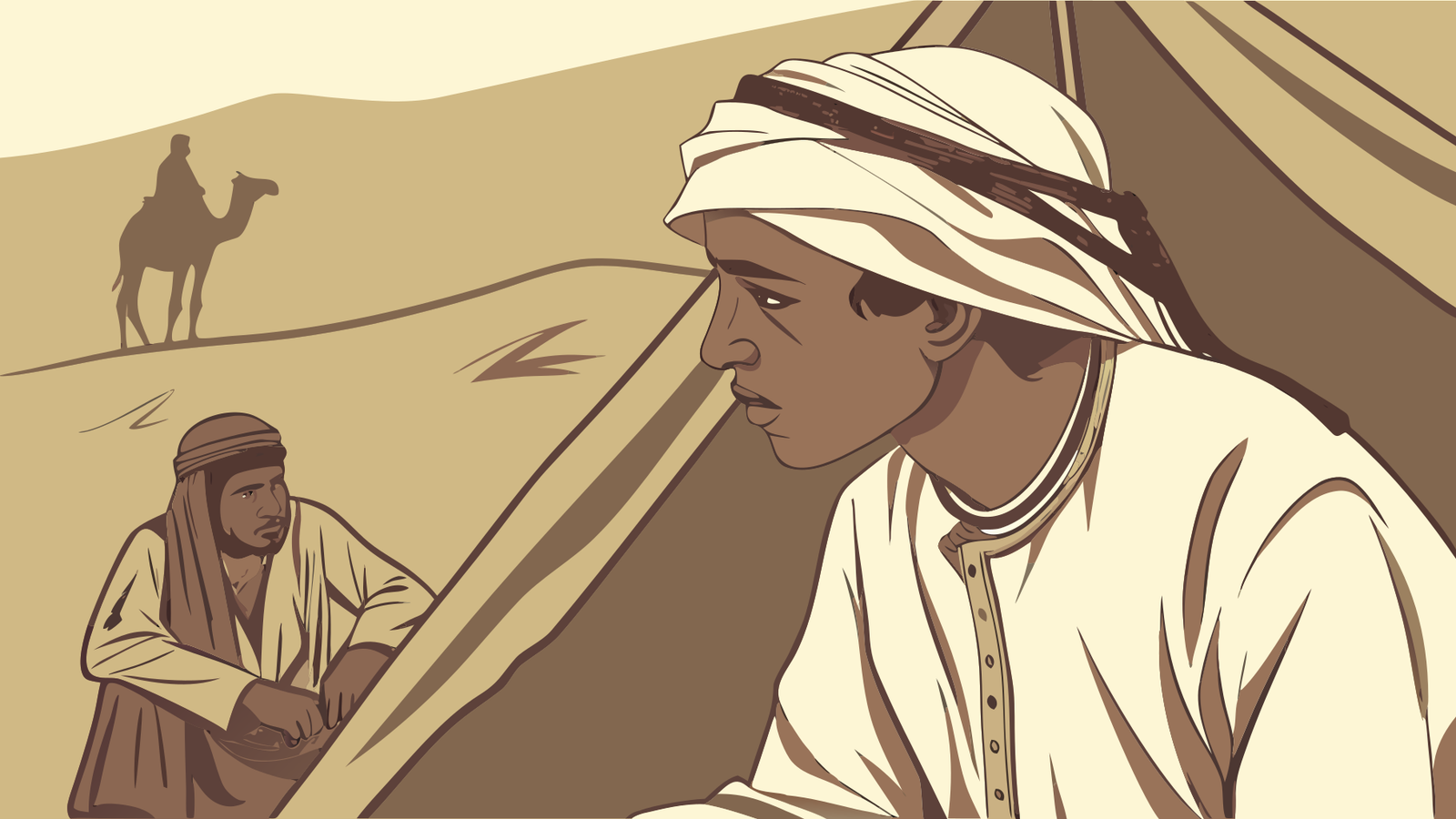
🏜️ Origins in the Hijaz and a Bedouin Education
I was born Faizal bin al-Hussein bin Ali al-Hashami in the Hijaz, the third son of Sharif Hussein of Mecca. We did not keep precise birth records in my tribe, but the Hijri calendar places my birth in 1883. My family belongs to the Hashemites, claiming direct lineage to the Prophet Muhammad, and my upbringing was shaped by a long-standing Hashemite tradition: spending formative years with a Bedouin family.
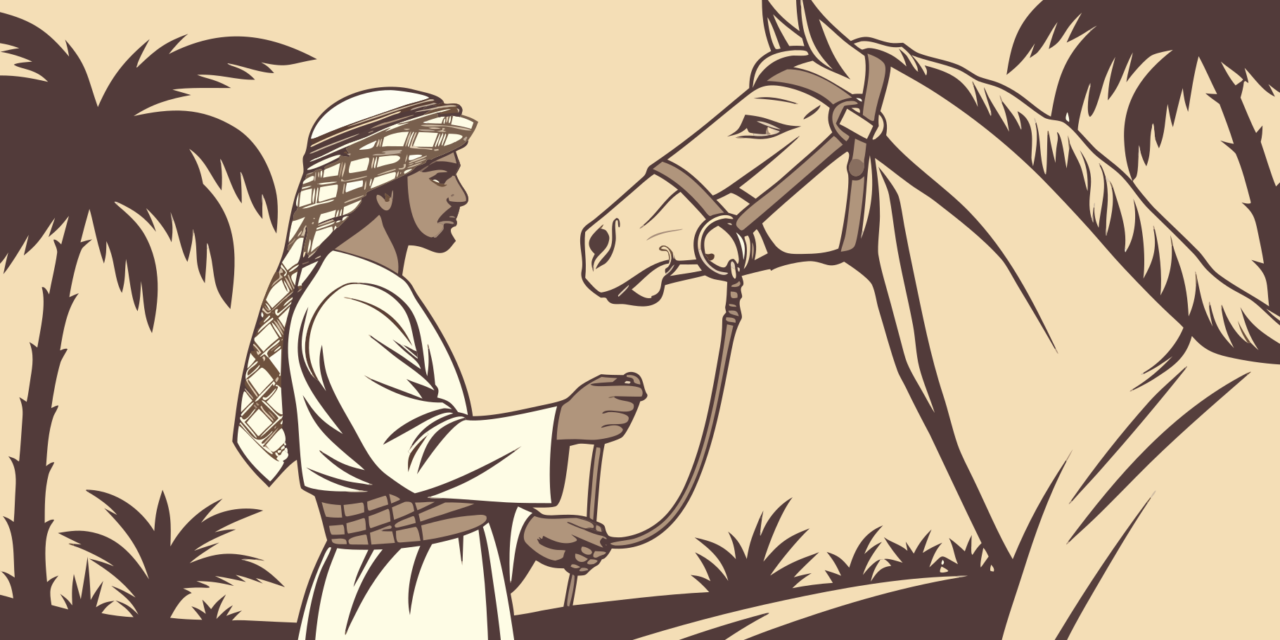
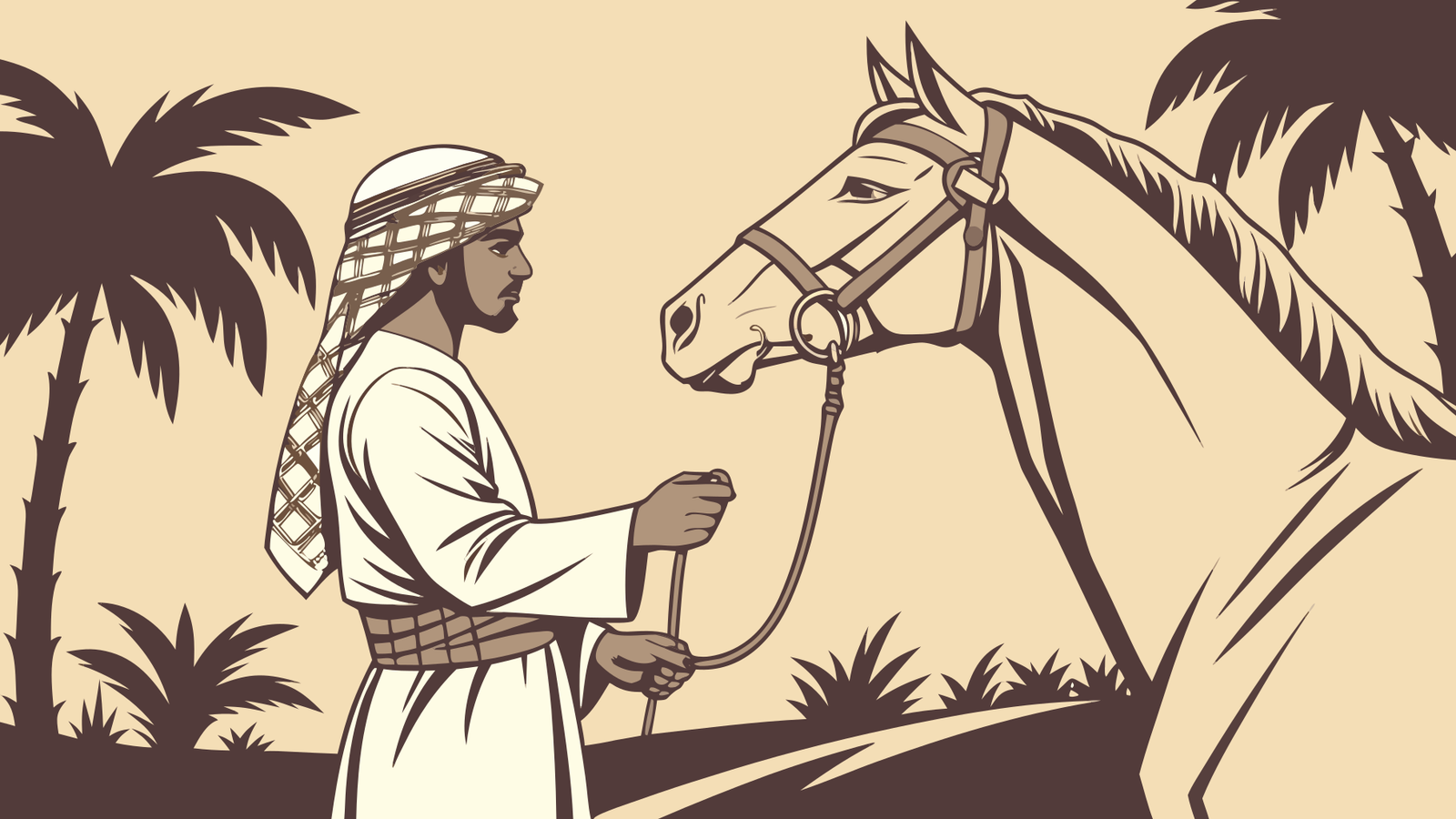
Living with the Otebe tribe taught me more than horsemanship. I learned poems, dialects, codes of justice and the simple but enduring lesson my guardian gave me: “If you are good to him, he will be good to you. If you do ill to him, he will do ill to you.” That counsel stayed with me for life.
🏛️ Constantinople, education and the making of a young leader
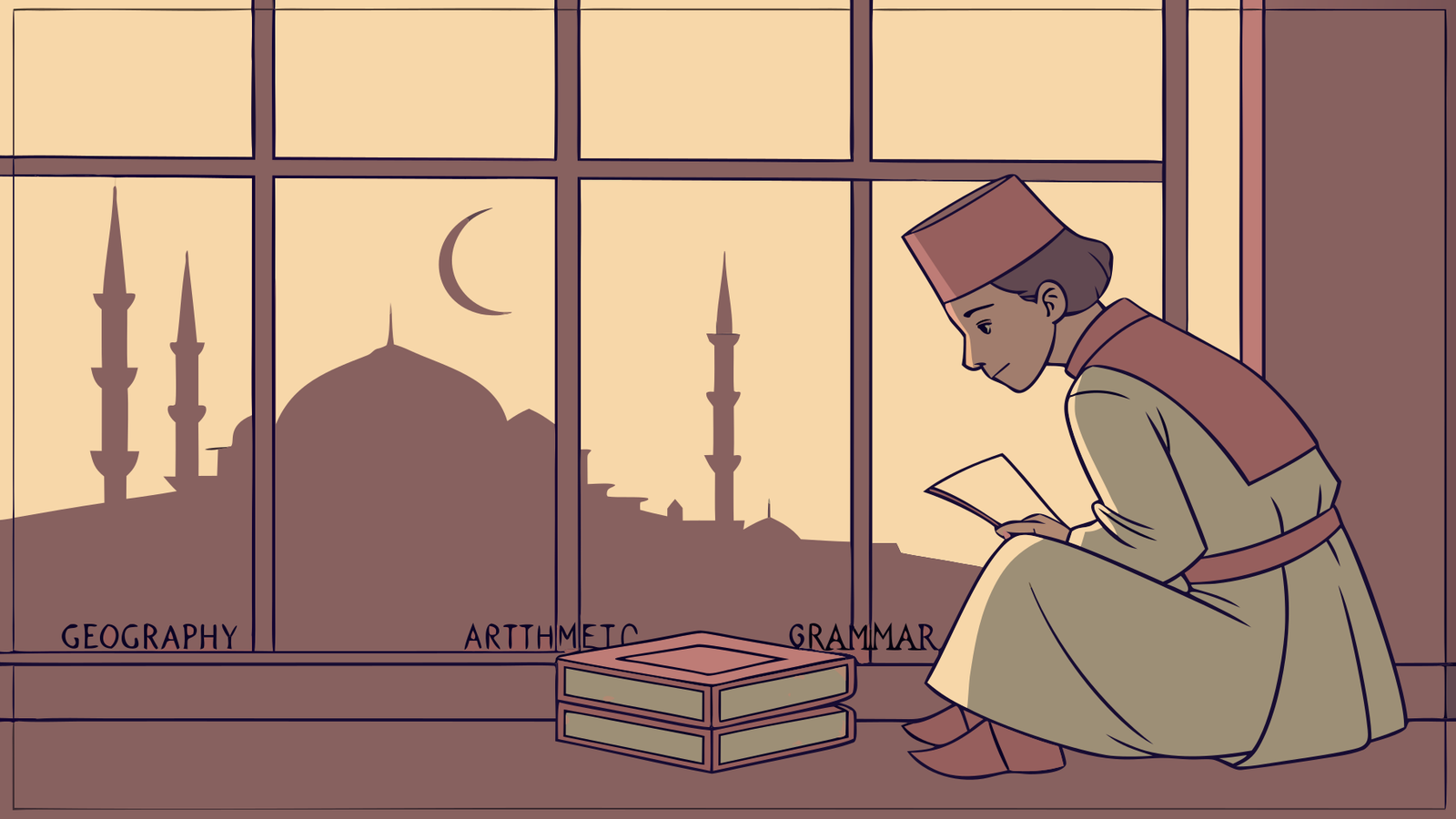
In 1893 my family moved to Constantinople after my father was summoned by Sultan Abdul Hamid II. The city dazzled me—the domes, minarets and the sense of being at the heart of an empire. But our stay was humble. We lived on a tight budget and sometimes felt held in virtual captivity.
Education was paramount in our household. I studied geography, arithmetic and grammar. My father taught us the Quran and insisted knowledge and manners make a Sharif rather than mere birth. I learned some Turkish, a little English and French, and received military training. All these skills would matter in the years to come, though my imperfect English later proved a vulnerability in dealings with certain British officials.
⚔️ The Arab Revolt and my collaboration with T.E. Lawrence
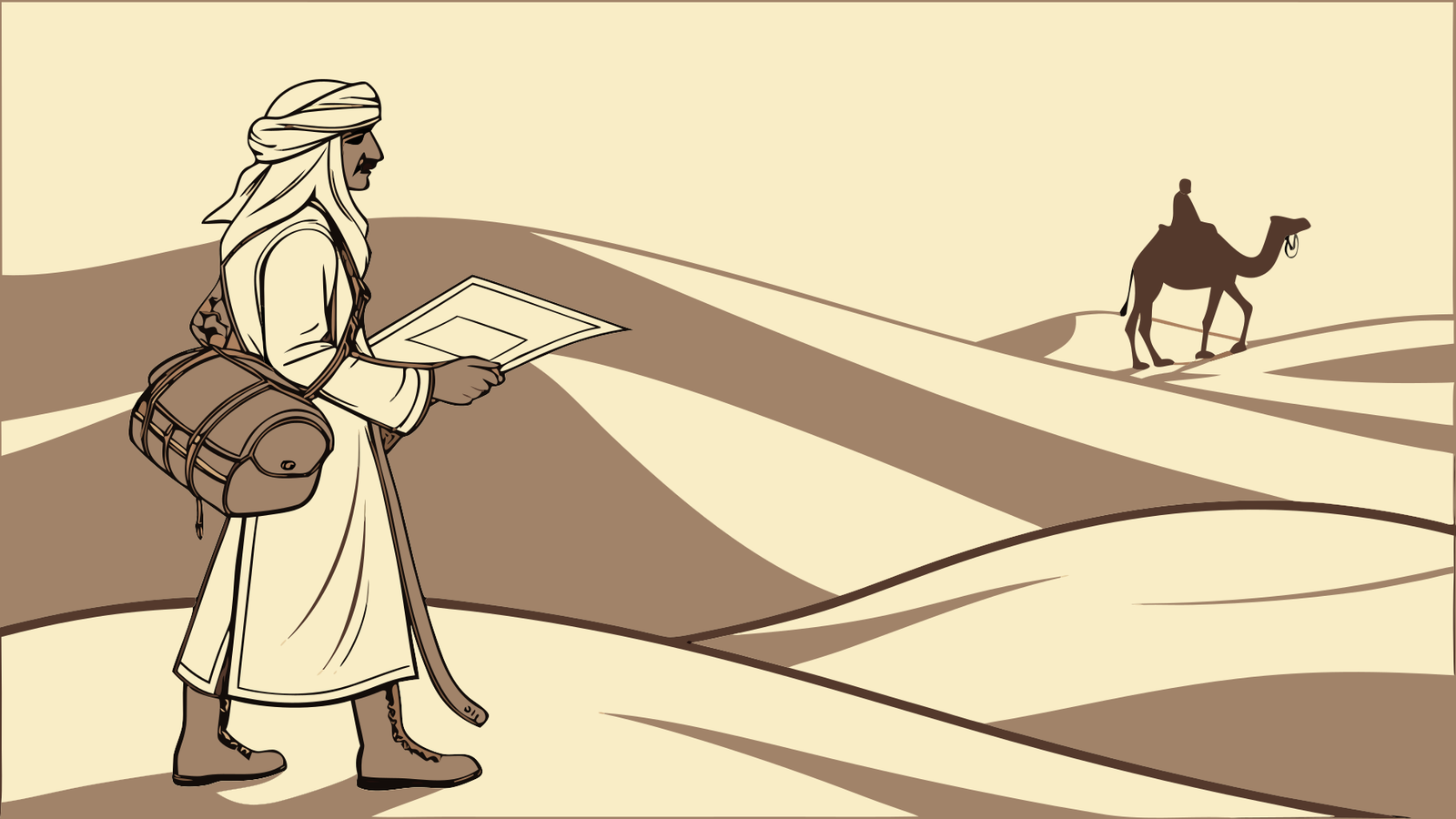
As the Ottoman Empire grew brittle and the First World War reshaped loyalties, my father began to consider revolt. In 1915 I travelled to Damascus to test support for Arab independence. I listened to secret nationalist societies and carried their demands to my father. When the Ottoman leadership executed Arab nationalists in Damascus, I could no longer stand divided loyalties. On 10 June 1916 my father fired the shot that began the Arab Revolt.
I commanded the Northern Army. My brothers led the Southern and Eastern fronts. We recruited ex-Ottoman officers and sympathetic soldiers. Our tactics were as much political as military: striking the Hijaz Railway to cut Ottoman supply lines, winning tribal leaders, and keeping the broader goal of Arab unity always in mind.
One of the most consequential alliances I made was with a British intelligence officer named Thomas Edward Lawrence. He later wrote that at first glance he felt I was “the leader who would bring the Arab revolt to full glory.” Lawrence brought guns and gold; in return I gave him camels, robes and the freedom to move with our forces. Together we captured Aqaba and struck at Ottoman positions, using mobility, local knowledge and a shared short-term interest in weakening the Turks.
🪪 Betrayals, promises and the postwar settlement
The war was not fought in a vacuum. While my father and I negotiated with Britain, secret deals were being made in Europe. In May 1916 the Sykes-Picot agreement divided the Levant between Britain and France. In 1917 the Balfour Declaration pledged British support for a national home for the Jewish people in Palestine. These actions made clear that European powers had conflicting promises and interests in the region.
“The British intend to keep Palestine for themselves. They’ll say it’s part of a balance between conflicting religions, and they’ll say it’s a cheap price to pay for the British help so graciously given to me.”
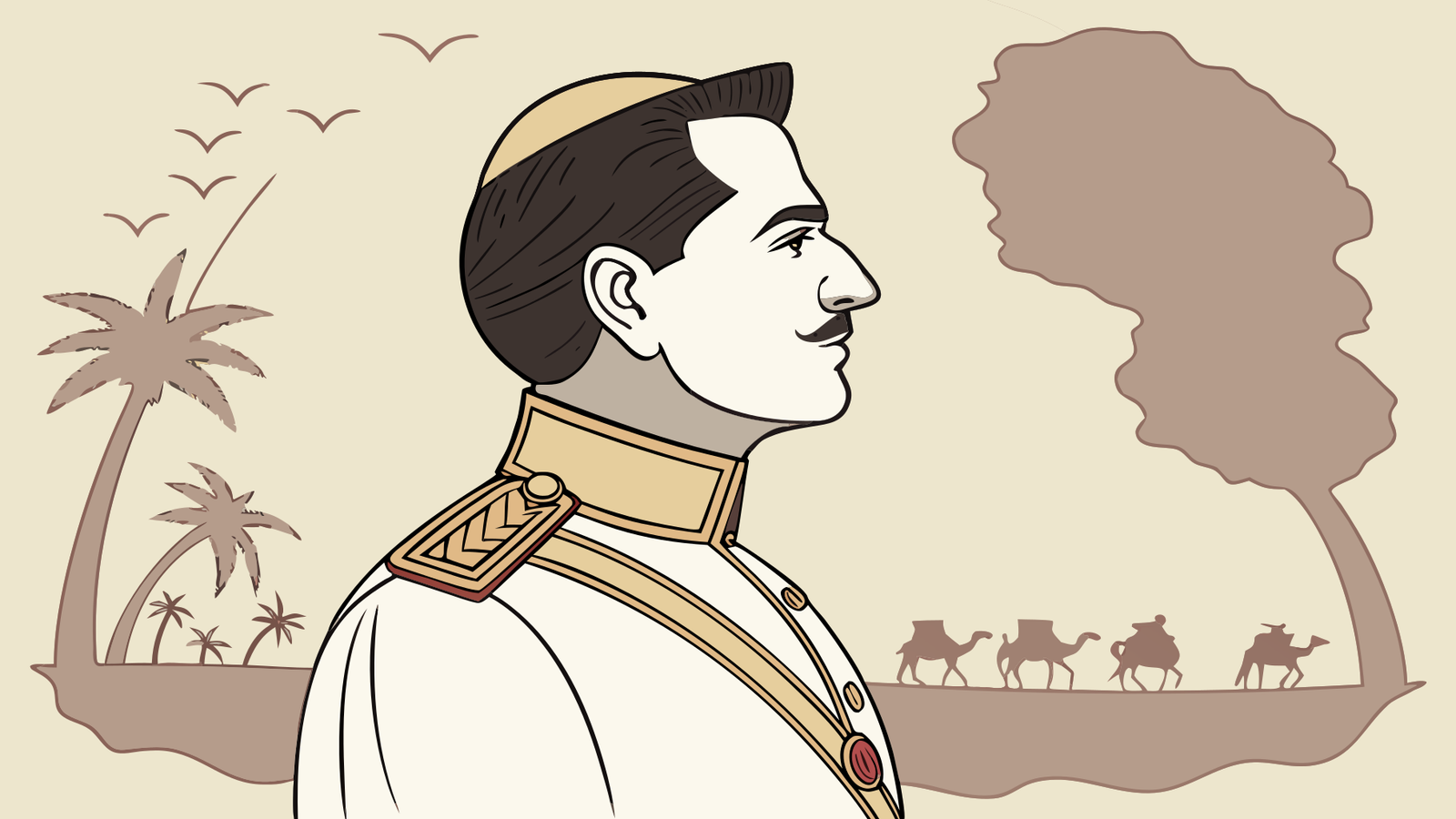
I travelled to the Paris Peace Conference in 1919 representing my father, demanding independence for Arab-speaking peoples and sovereignty guaranteed by the League of Nations. I also signed a nine-point understanding with Chaim Weizmann on mutual respect between Arabs and Jews, adding a final clause: if any departure from the promise of Arab independence occurred, I would withdraw my agreement.
Despite President Wilson’s rhetoric of self-determination, the French and British defended their secret deals. I spoke plainly: Western delegates were profoundly ignorant of our realities and treated Arabs as mere caricatures. When I returned, the Syrian National Congress proclaimed me king of a short-lived Arab Kingdom of Syria in March 1920, only for French troops to arrive and for me to be exiled by July.
👑 Exile, London and the crown of Iraq
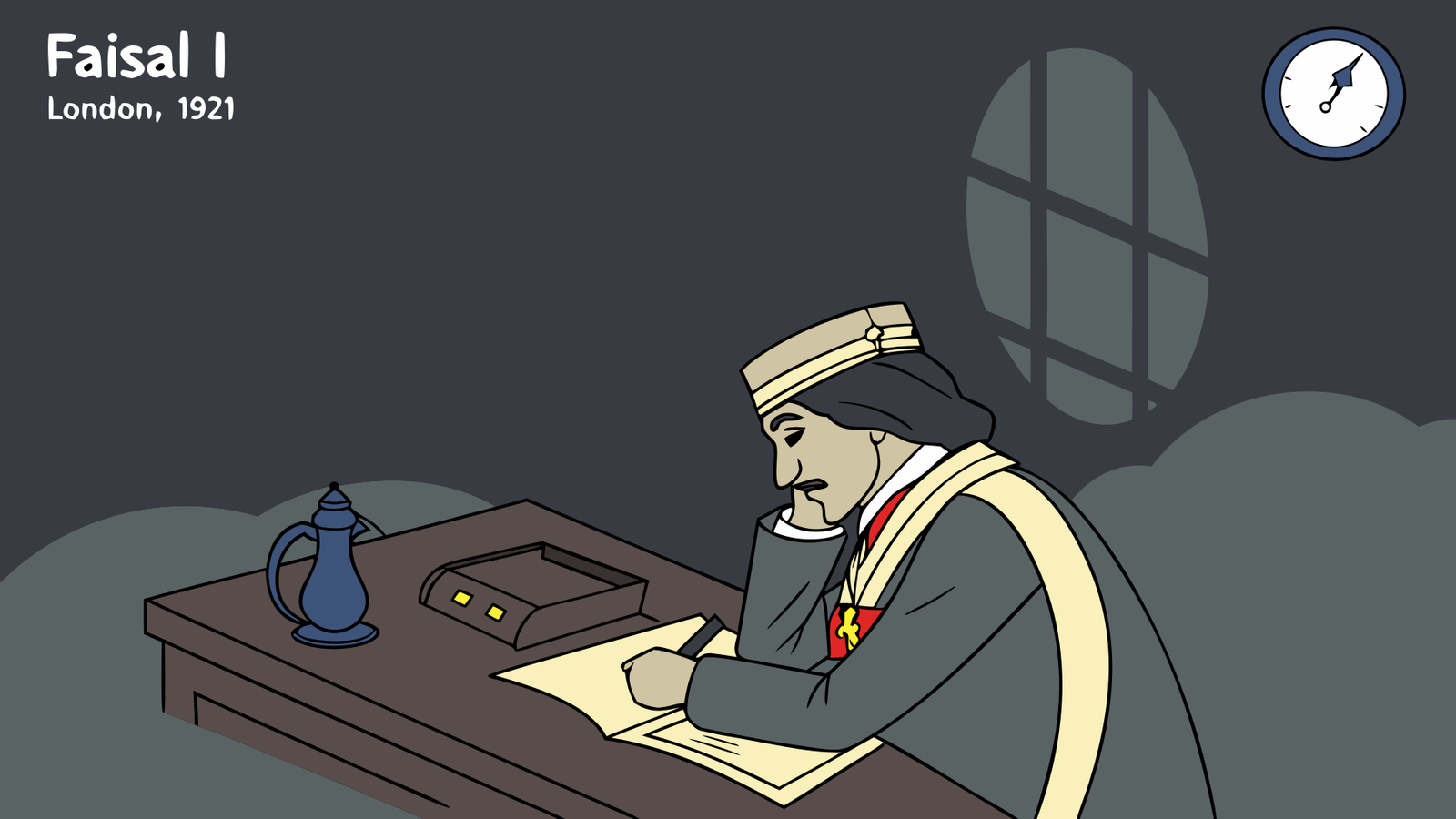
Exiled from Syria, I went to London. Britain, seeking a new balance in the postwar Levant, convened the Cairo Conference in 1921 under colonial secretary Winston Churchill. The plan offered the Hashemites governance over carved parts of former Ottoman territory: Abdullah in Transjordan, and me in a new country called Iraq.
It was not an easy decision. I confided that I preferred “death to a life of irrelevance in the Hejaz” yet I feared accepting a throne offered by Britain whose mandate would limit sovereignty. The Anglo-British plan included a treaty promising eventual independence in return for British strategic privileges. After long reflection I accepted and was installed as King of Iraq on 23 August 1921. “I will be your king, but I won’t be a tyrant,” I announced, aware I had to walk a tightrope between winning the confidence of Iraqis and managing relations with Britain.
⚖️ Building a state: compromise, constitution and uneasy independence
Creating a single nation from the three Ottoman provinces of Mosul, Baghdad and Basra was daunting. Few Iraqis knew me at first. I relied on diplomacy, compromise and a public-relations partnership with Gertrude Bell, the English explorer and administrator who spoke Arabic and Persian and helped persuade local leaders to accept my rule.
In 1924 Iraq adopted its first constitution as a hereditary constitutional monarchy with me as head of state. The road to full sovereignty remained fraught. In 1930 I signed the Anglo-Iraqi Treaty that led to League of Nations recognition and formal independence on 3 October 1932. The treaty promised the British certain strategic privileges, and critics accused my supporters of bribery to secure parliamentary approval. Some saw the agreement as the best achievable compromise; others felt I had betrayed full independence.
🕊️ Controversy, fatigue and the question of leadership
Ruling required choices that weighed national unity against justice for minorities. In 1933 tensions with the Assyrian community demanding autonomy escalated into violence. My preference was to lead through consensus and compromise, but the government responded brutally. Thousands of Assyrians were killed and more than a hundred villages destroyed. I bore the burden of command and responsibility as the crisis unfolded.
Years of strain took a toll. I survived on cigarettes and coffee and became increasingly ill. The pressures of balancing British interests, tribal dynamics, ethnic and religious divisions, and the dream of Arab unity were relentless. I left for medical treatment in Switzerland as my health declined.
🕯️ Death and legacy
On 8 September 1933 I died of a heart attack in Bern. My coffin was draped in the Iraqi flag and transported through the region. Hundreds of thousands lined the streets of Baghdad for my funeral. In death, people across the Arab world united in mourning; black flags flew from Damascus to Jerusalem.
My life witnessed the fall of an empire and the rise of new states. I spent myself on the cause of Arab independence, unity and rights. I was patient and diplomatic, sometimes compromised and sometimes betrayed. I was twice crowned and twice exiled; I loved and I lost. I did the best I could with what history and circumstance offered.